Australian online pokies: rules, offers and payments
 Available in AU

Australia’s rules distinguish the offshore operator from the player, while payment options and promotions do not establish local authorisation.
Table of Contents
- Real-Money Play in a Market Without Local Casino Licences
- What “Australian Pokies” Means Under Australian Rules
- PayID: A Bank Transfer Route, Not a Seal of Approval
- The Fine Print Behind No-Deposit Offers
- Free Spins and the Limits of “Free”
- Sign-Up Bonuses: The Arithmetic Behind the Welcome
- Playing on a Phone Does Not Change the Odds
- Online Casino Pokies and the Older Venue Tradition
- Trust, Verification and the Limits of an Offshore Promise
- New Pokies, Old Questions About Return
- Pokies
Real-Money Play in a Market Without Local Casino Licences
Real-money pokies sit in an unusual legal position in Australia. The Interactive Gambling Act 2001 makes it unlawful for a company to provide online casino games to people in Australia without a domestic licence. No Australian online casino licences have been issued. The prohibition therefore falls on the business offering the games, not on the person who plays them.
That distinction matters. An Australian who uses an offshore site is not committing an offence simply by playing there, and the law does not impose a player penalty for doing so. Some overseas operators accept Australian customers despite having no Australian licence. Their willingness to take a deposit, open an account or display familiar pokies does not turn their service into a locally authorised one.
The arrangement can look more settled than it is. A site may be available on a screen, use Australian currency or present itself as made for local players. These are features of its service, not evidence of a domestic licence. In this market, there is no Australian-licensed online casino behind the familiar language of “Australian pokies”. The operator may be based elsewhere, governed by rules elsewhere and answerable to authorities elsewhere.
The legal distinction is not a technical footnote. It separates the person who places a bet from the company that makes the bet possible. Australia’s law seeks to prevent companies from supplying real-money online casino services to people here without local authorisation. It does not follow that every customer of an offshore site is breaking that law. A player may therefore face no prosecution for the act of playing and still be exposed to a serious practical risk.
That risk appears most plainly when money is owed. If an offshore casino refuses to release winnings, Australian players cannot rely on an Australian legal route to compel payment. The absence of a local licence is not merely a missing badge on a website; it also means there is no Australian-licensed casino operator against which a domestic claim for withheld winnings can be pursued. The site may have its own complaints process, but an internal process is not the same thing as enforceable recourse in Australia.
Fast payout online casinos in Australia: what to check
A promise to pay and an ability to make that promise stick are different things. Offshore terms may describe how a casino handles accounts or disputes, but accepting those terms does not create the protections of a domestic licence. Nor does the simple fact that a site has allowed an Australian account to be opened establish that an Australian authority can make it honour a withdrawal. The transaction can cross a border more easily than a complaint can.
This is where the split between operator and player becomes easy to misunderstand. “The player is not liable” can sound like “the player is protected”. It means something narrower: the legal prohibition is directed at the company providing the service, rather than at the individual customer. It does not guarantee that a deposit will be returned, that winnings will be paid, or that a disagreement will be resolved in the player’s favour. Freedom from a player offence is not a substitute for a local remedy.
Access itself should not be mistaken for endorsement. Offshore gambling sites can be blocked in Australia, and the fact that a particular site can still be reached does not change the law governing the service. Blocking and availability may coexist: a site’s address may be restricted while an operator continues trying to serve customers from abroad. The web has a talent for making jurisdiction look like a settings menu.
The same caution applies to labels such as “real Australian online pokies”. The phrase may describe games offered to Australians, or simply the market an offshore operator hopes to attract. It does not describe a category of games supplied by Australian-licensed online casinos, because none exist. Familiar local terms cannot supply the legal status that the market lacks.
No Local Recourse
If an offshore casino refuses to release winnings, Australian players cannot rely on an Australian legal route to compel payment due to the absence of a local licence.
This is a financial exposure as much as a legal one. A person can be outside the law’s direct reach as a player while still dealing with a business that has no domestic licence and leaves no Australian route for recovering unpaid winnings. Those two conditions are not contradictory. They are the central imbalance: the operator may be acting unlawfully by providing the service, while the person who uses it is not penalised for playing, yet that person may have little practical leverage if the operator keeps the money.
Real-money play in this setting is therefore not made secure by the absence of player liability. It remains a transaction with an offshore business, under terms that do not create Australian casino oversight or domestic recourse for a refused payout. The legal boundary is clear; the protection across it is not. A narrow permission. A wide exposure.
What “Australian Pokies” Means Under Australian Rules
Choosing an online pokies site in Australia means weighing the details that matter to you, such as licensing, deposits and payout information. This list offers a concise reference to help you review the available facts for 2026.
1. MrPacho
Payout speed: crypto 30-120 minutes, fiat 24-72 hours · Min. deposit: A$30
MrPacho lists crypto payouts at 30–120 minutes and fiat payouts at 24–72 hours. Its minimum deposit is A$30.
2. Rollero Casino
License: Curacao Gaming Control Board OGL/2023/176/0095 (Hollycorn N.V.)
Rollero Casino is listed under Curacao Gaming Control Board licence OGL/2023/176/0095, held by Hollycorn N.V.
3. Neospin
License: Curacao Gaming Control Board OGL/2023/176/0095 (Hollycorn N.V.)
Neospin is listed under Curacao Gaming Control Board licence OGL/2023/176/0095, held by Hollycorn N.V.
4. LevelUp Casino
License: Curacao eGaming OGL/2023/174/0082 (Dama N.V.) · Min. deposit: A$15
LevelUp Casino is listed under Curacao eGaming licence OGL/2023/174/0082, held by Dama N.V. Its minimum deposit is A$15.
5. SkyCrown
License: Tobique Gaming Commission · Payout speed: crypto ~10-15 minutes, fiat 1-5 days · Min. deposit: A$30
SkyCrown is listed with a Tobique Gaming Commission licence. Its stated payout speeds are around 10–15 minutes for crypto and 1–5 days for fiat; the minimum deposit is A$30.
6. SpinsUp
License: Curacao Gaming Control Board OGL/2023/174/0082 (Dama N.V.)
SpinsUp is listed under Curacao Gaming Control Board licence OGL/2023/174/0082, held by Dama N.V.
7. Vegaz Casino
License: Curacao OGL/2024/1335/0780 · Min. deposit: EUR 20
Vegaz Casino is listed under Curacao licence OGL/2024/1335/0780. Its minimum deposit is EUR 20.
8. Kingmaker
Payout speed: crypto ~90 minutes, fiat 1-5 days · Min. deposit: A$30
Kingmaker lists crypto payouts at around 90 minutes and fiat payouts at 1–5 days. Its minimum deposit is A$30.
9. WinSpirit Casino
License: Curacao eGaming OGL/2024/923/0383 (Antillephone N.V.) · Min. deposit: A$30
WinSpirit Casino is listed under Curacao eGaming licence OGL/2024/923/0383, held by Antillephone N.V. Its minimum deposit is A$30.
10. Uptown Pokies
License: Curacao (operating since 2017) · Min. deposit: A$20
Uptown Pokies is described as operating since 2017 and lists a Curacao licence. Its minimum deposit is A$20.
“Australian pokies” can describe a familiar style of play, or simply the audience a website hopes to reach. It does not mean that an online casino holds an Australian licence. There is no Australian-licensed online casino, and the phrase cannot turn an offshore service into a domestic one. Familiar language, unfamiliar legal ground.
The distinction matters because Australian rules focus on the service being offered, not on whether its games look or sound local. The Interactive Gambling Act 2001 prohibits operators from providing real-money online casino games to people in Australia. That includes pokies. A site may use Australian terminology or display games associated with local tastes, but neither feature changes the legal status of the service.
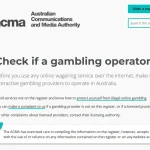
The central domestic regulator is the Australian Communications and Media Authority, or ACMA. It enforces the Interactive Gambling Act and can block access to illegal offshore gambling sites. Internet service providers are required to follow ACMA’s blocklist. The mechanism is a response to prohibited services: it is not a process for licensing offshore casinos, nor a public seal of approval for sites that remain accessible.
That distinction can be easy to miss. A blocked page is not the only sign that a service falls within the law, and a page that loads is not thereby authorised in Australia. Access can change as blocking measures are applied, while the legal test concerns the operator’s provision of the service to people in the country. The internet has always been good at making distance look like permission.
Best Casino in Adelaide: Hotels, Dining and Venue Guide
The phrase “online Australian pokies” therefore describes a search for a kind of entertainment, not a recognised category of Australian-licensed casino. There may be Australian players, Australian currency, or language aimed at the local market. Those details do not create a domestic regulatory framework where none exists. Nor does the word “best” settle the more basic question of what the service is and where it is regulated.
Age is a separate rule, and a straightforward one. The legal minimum age for gambling in Australia, including online pokies, is 18. That threshold applies across forms of gambling; an online setting does not make the activity exempt. It is a boundary, not an endorsement of every service available beyond it.
The phrase “best Australian pokies online” can consequently carry two different ideas at once: a familiar national gaming culture and a market in which online casino operators have no Australian licence. Those ideas should not be folded together. The country’s relationship with pokies has a long public history, but online access does not inherit the status of a land-based venue simply because the same word is used.
ACMA’s blocking role belongs to this national picture. Its blocklist is one way the law is enforced, and providers must comply with it. It does not convert the remaining landscape into a set of locally regulated choices. A site’s visibility, branding or ease of access is not a substitute for an Australian online-casino licence.
ACMA Enforcement
The Australian Communications and Media Authority enforces the Interactive Gambling Act and can block access to illegal offshore gambling sites via internet service providers.
So “Australian pokies” is best read as a cultural or audience label, rather than a statement about local authorisation. The legal setting is defined by the Interactive Gambling Act, ACMA’s enforcement role and the 18-year age minimum—not by the wording on a site’s home page. The label travels easily. The licence does not.
PayID: A Bank Transfer Route, Not a Seal of Approval
PayID is best understood as a name attached to a bank transfer, not as a separate wallet holding money. It sits over Australia’s New Payments Platform (NPP), allowing a payment to be addressed through an email address, mobile number or ABN rather than relying only on account details. The NPP is supported by all major banks, and its transfers use end-to-end encryption. That describes the payment infrastructure; it does not certify the business receiving a transfer.
For real-money play, a PayID must first be linked to a bank account. The alias makes a destination easier to identify, but the funds still move through the banking system. In that respect, Australian online pokies with a PayID option do not create a special financial channel beyond the ordinary account-based transfer. The payment method is familiar; the transaction’s purpose may not be welcome to the bank.
That distinction matters because a transfer can be technically available and still be refused. A specialist review reports that some Australian banks, including members of the Big Four, have at times blocked PayID transfers to gambling merchants they recognise. This is not a permanent rule applying to every customer or every payment. Bank policies and merchant detection can change, and a successful transfer on one occasion says little about whether another will go through.
A rejected payment is not evidence that PayID itself has failed. The alias may be valid, the bank account linked correctly and the NPP working as designed, while a bank’s controls stop the particular transaction. Those are separate layers: the payment network carries instructions, the bank decides what it will process, and the recipient is the party named in the transfer. Collapsing them into the single claim that a site “accepts PayID” leaves out the most consequential question: whether the sending bank permits that payment.
Live Casino Online in Australia: Legal Reality
Nor does PayID support serve as a badge of licensing, fairness or openness about a game’s return. It establishes only that a payment route is offered. A site’s choice of payment method cannot tell a player whether its terms are dependable, whether a game’s return setting is disclosed, or what protections apply if a payment dispute arises. Banking infrastructure has no mandate to answer those questions. It is plumbing, not an inspection.
The wording around deposits can also blur who is making a promise. An operator may display PayID as an available option, while a bank may decline a transfer to a merchant it identifies as gambling-related. A payment page is therefore a statement about the recipient’s requested method, not a guarantee that the bank will approve it. A transfer that succeeds is not an endorsement from the bank either; processing a payment does not amount to a review of the recipient.
This is where the contrast with PayPal can be misleading. The names may appear together in searches about online payments, but PayID is not another brand of digital wallet. It is an alias layer for transfers through the NPP, tied to a bank account. The useful question is not which label sounds more convenient, but what happens between the account and the merchant: which institution sends the funds, which controls it applies, and whether the transfer is accepted.
The same caution applies when a payment method is described as being treated like any other qualifying deposit method. A specialist review may make that claim about the sites it has assessed, but it is not a rule governing every operator or every bank. Payment treatment can depend on the particular account and merchant, and a general statement cannot settle what will happen to an individual transfer.
PayID’s design reduces reliance on remembering or entering a recipient’s full banking details. That practical convenience should not be mistaken for anonymity or separation from the bank account: the method requires that account link, and the bank remains part of the transaction. If a bank blocks a gambling-related payment, the sensible interpretation is that its decision applies to that transfer, not that there is a technical trick to make the same payment acceptable. A blocked route is a boundary, not a puzzle.
Big Red Pokies Online in Australia: What’s Verifiable
The quiet appeal of an alias is that it makes banking feel less like banking. Yet every transfer still has a sender, a recipient and a financial institution in the middle. In Australian online pokies, PayID can describe how money is routed. It cannot certify what lies at the other end.
The Fine Print Behind No-Deposit Offers
A no-deposit offer sounds like a gift with no first move required. In practice, the phrase describes only how an offer begins; it says little about whether any resulting balance can be withdrawn. The conditions attached to the offer decide that. A headline promising free play may sit above wagering rules that keep winnings locked until a specified amount of play has been completed.
That distinction matters when assessing claims about Australian no-deposit pokies or free spins. The apparent value is not the same as cash available to withdraw. Wagering requirements set a turnover target: bets must add up to a stated multiple before the offer’s winnings become eligible for cash-out. The relevant figure is therefore not just the offer displayed at the top of a page, but the multiplier in its terms and the amount to which that multiplier applies.
A specialist review suggests treating wagering requirements of 35x or less as a more favourable benchmark, while describing anything above 40x as punishing. Those are evaluative guideposts, not a guarantee that an offer is fair or worthwhile. The same multiplier can produce different obligations depending on how the terms define the qualifying balance. If that definition is unclear, the headline is doing more work than the offer.
The less visible clauses can matter just as much. A free-spin promotion may place a ceiling on winnings that can be cashed out, according to a specialist review. Once that cap applies, completing the wagering requirement does not necessarily make the full balance withdrawable. The promotion’s terms may also define which games count towards turnover and how long the offer remains available. Such details determine whether play advances the requirement at all.
Do
- Check the wagering multiplier
- Verify the qualifying balance base
- Review cash-out ceilings
Don’t
- Trust a “free” headline alone
- Assume all winnings are withdrawable
- Ignore the fine print of bonus codes
This is why Australian pokies bonus codes, including codes presented as no-deposit offers, should be read as gateways to terms rather than as proof of a usable benefit. A code can unlock an offer; it cannot erase its conditions. If the rules are difficult to locate, vague about what counts, or inconsistent about cash-out eligibility, the uncertainty itself is part of the cost.
There is a small theatre to the word “free”. It places the offer in the language of generosity, while the conditions translate it into a contract about play, time and withdrawal. A balance shown on screen may look settled; the terms can still make it conditional. The difference is not decorative.
For anyone comparing no-deposit offers, the useful questions are narrow: what must be wagered, which balance is multiplied, which games qualify, and whether winnings are subject to a cash-out cap? Answers belong in the offer’s rules, not in a promotional label or a bonus code. Without them, “good” says more about the presentation than the terms.
The offer is only the opening line. The fine print supplies the plot.
Free Spins and the Limits of “Free”
A free spin sounds like a small gift from the machinery of online gambling: no coin placed in the slot for that turn, a chance to see what the reels produce. But the word “free” describes the spin, not necessarily what can be taken away from it. Promotional language tends to make those two ideas sit close together. The terms can put them at a distance.
Online Keno Casinos in Australia: Legal Limits
A specialist review reports that free-spin offers may limit the amount of winnings that can be cashed out. That is a specific restriction, not a universal rule: the existence and shape of such a cap depend on the offer’s terms. Where one applies, a winning result may appear in the account without the full amount being eligible for withdrawal. The distinction is easy to miss when the headline is built around the spin and the condition is tucked into the detail.
This is why a promotion needs to be read as a set of conditions rather than as a tally of spins. The relevant question is not only how many turns are offered, but what happens to any resulting balance. A cap on cashable winnings changes the meaning of a win: the displayed result and the amount that can ultimately leave the account may not be the same. That does not make every free-spin offer identical, nor does it establish that every offer has a cap. It makes the terms decisive.
The language of “free” also risks shrinking the sense of consequence. A spin can cost nothing at the moment it is taken and still sit inside a commercial arrangement designed to draw attention to a gambling service. Free play is not evidence that the outcome is valuable, nor that any winnings are unrestricted. The offer is a promotion, not a promise.
The same caution applies to phrases such as Australian free pokies or free online pokies for Australian players. They can describe a form of promotional play, but they do not explain what the terms permit. Nor do they establish that an offer is available at a particular site. Availability and cash-out conditions are separate matters, and both depend on what the operator has actually set out for that promotion.
Aussie Online Casino Guide: Law, Access and Protection
The practical significance of a cap is plain: a large-looking result can be subject to a smaller withdrawable amount. The size of that difference cannot be inferred from the words “free spins” alone. Without the specific terms, a headline is only a headline.
A free turn may be free to take. Its winnings may not be free to keep.
Sign-Up Bonuses: The Arithmetic Behind the Welcome
A sign-up bonus can look substantial when described as a match on a deposit. The less prominent figure is the wagering requirement: the amount that must be staked before the bonus-related balance can be withdrawn. Its multiplier is only half the calculation. The other half is the base to which that multiplier applies.
A term of 40x might apply to the bonus alone, or to the deposit and bonus together. Those are different obligations, even if the advertised bonus amount is identical. A welcome offer that says “40x” without making its calculation base clear has not yet supplied the information needed to understand its cost in play.
A specialist review illustrates the difference with a $500 bonus carrying a 40x requirement. If the multiplier applies to the bonus alone, the turnover is $20,000 before winnings can be withdrawn. That is the arithmetic, not a prediction of how much a player will lose: turnover counts the amount staked, while outcomes vary from spin to spin.
The same review gives a second calculation for a $500 deposit matched by a $500 bonus, with 35x applied to the combined amount. The base is then $1,000, making the required turnover $35,000. The smaller multiplier does not make this the smaller obligation; the larger base changes the result. A headline that presents only the bonus and multiplier leaves this distinction easy to miss.
Best Pokies in Perth: Hours, Venues and Legal Context
The review recommends looking for requirements of 35x or lower and describes anything above 40x as punishing. That is its evaluative threshold, not a universal rule. The useful comparison is the stated multiplier together with its exact base. A lower multiplier on deposit plus bonus can demand more turnover than a higher one on the bonus alone.
Bonus terms can therefore be read as a small equation: eligible amount multiplied by wagering requirement. Before the equation is complete, the offer’s headline value says little about the amount of play attached to it. The arithmetic is plain. The framing is less so.
These figures describe the mechanics of deposit-linked welcome offers, not a recommendation to claim one. The offer’s apparent generosity may sit in the first line; the obligation sits in the calculation beneath it. A bonus is not cash simply because it has a dollar sign beside it.
Playing on a Phone Does Not Change the Odds
A phone changes the shape of the screen, not the mathematics of a pokie. Buttons may be arranged for touch, symbols appear smaller, and menus can be tucked away; those are matters of interface. They do not make a spin more likely to pay, and a mobile label is no evidence of a better return.
Each spin is an independent event generated by a Random Number Generator. A win on one turn does not make a win due on the next, nor does a run of losses mean the game is “warming up”. The device supplies the means of interaction, not a memory of previous outcomes. That distinction can be easy to lose when a sequence of animated results feels like a conversation with the screen. It is not.
RTP Variations
Some providers allow casinos to choose between different return-to-player settings for the same pokie, meaning the same game may have different returns at different casinos.
There is a less visible variable than screen size. A specialist review reports that some providers let casinos choose among multiple return-to-player settings for the same pokie. As a result, matching game names do not necessarily mean matching return percentages across casinos. The setting is attached to the casino’s version of the game, not to the phone used to open it.
That makes a search for a polished Australian pokies app beside the point if the question is about odds. A native app, a mobile website or a desktop view can differ in layout and navigation; none, by itself, establishes which RTP setting is in use. Nor does a smooth display reveal whether two versions of a game share the same configuration. The screen is the shop window. The setting is elsewhere.
The familiar language of “top” games and “best” mobile play tends to collapse two different judgments into one. A game may feel legible on a small screen, while its return setting remains a separate matter. A tidy interface can make play easier to follow. It cannot turn chance into skill, or disclose a hidden configuration merely by looking convincing.
Mobile access is therefore a question of presentation, not probability. The relevant distinction is between the physical device and the game’s underlying settings: one fits the experience to a screen; the other can affect the stated return. Comfortable tapping is not an odds advantage. Short version: glass, not magic.
Online Casino Pokies and the Older Venue Tradition
The language of online pokies belongs to a culture older than the browser: Australians have long encountered gaming machines as part of the physical landscape of clubs and pubs. The comparison is revealing, though not because a venue and a website share the same rules. In a venue, machines sit among staff, patrons and ordinary routines; harm can become visible in the room. That visibility has helped shape duties tied to the place itself.
Pokies by Region: Australian Casino and City Guides
A report by regionriverina.com.au says that, from 1 July, a venue operating more than 20 gaming machines must have a dedicated responsible gambling officer (RGO) on duty while those machines are running. The role is not simply a notice on a wall. It puts a named responsibility into the hours when play is taking place, making oversight part of the venue’s operation rather than an afterthought.
The same report describes a one-month transition period for venues to remove signage and put responsible gambling officers in place. Signage is not neutral decoration in a gambling setting: it can direct attention and movement, and the rules around where it appears matter. In particular, signs directing patrons to gaming lounges should not be within sight of ATMs or EFTPOS terminals, and signs pointing to ATMs should not be visible from gaming machines.
The reporting duty reaches beyond what can be managed in the moment. Venues are also to keep a gambling incident register, recording events that may indicate a patron is at risk of harm or already affected by it. A register turns an episode into something that can be reviewed later: a record of what happened, rather than a fleeting concern that disappears when a shift ends.
This is a distinctly venue-shaped form of responsibility. The RGO is present where machines operate; the register belongs to the establishment that hosts them. Online language borrows the familiar image of Australian casino pokies, but a screen has no floor staff watching a room and no venue register in which an incident can be entered. The distinction is less about nostalgia than about where responsibility can be made concrete.
Older habits, newer screens.
Trust, Verification and the Limits of an Offshore Promise
A withdrawal can turn a quiet account into a request for paperwork. A specialist review reports that casinos may ask for identity documents before a first cash-out, including a photo of official identification and proof of address; some also request a selfie with the identification. The precise requirements belong to the operator’s terms, not to a universal procedure.
These checks can establish whether the person requesting payment matches the account details. That makes them worth completing before a withdrawal is attempted, rather than treating them as an afterthought once winnings are waiting. Account names and addresses should be consistent, and the requested identity and address documents should be verified in advance. A site’s willingness to check documents, however, is not proof that it will honour every claim.
Nor does a completed verification create an Australian remedy. If an offshore casino refuses to pay, Australian players have no legal recourse in Australia. The distinction matters: identity checks may satisfy the operator’s process, but they do not give that operator a domestic licence or place a dispute within an Australian casino complaints system. Paperwork can confirm who is asking. It cannot make a promise enforceable here.
Instant Payout Online Casinos in Australia: Legal Limits
BetStop has a similarly important boundary. It applies to Australian-licensed operators; it does not bind offshore sites. Since Australia has no licensed online casino, a person who has self-excluded through BetStop cannot assume that an offshore pokies account will be blocked by that service. An offshore site’s own controls are separate from BetStop, and the service cannot be treated as a safeguard against access there.
This is the awkward arithmetic of trust: verification may be required to receive money, while doing nothing to improve the legal position if payment is denied. A polished account page, a completed identity check or a confident assurance from an offshore operator should not be confused with Australian protection.
No local recourse.
New Pokies, Old Questions About Return
A newly released pokie can attract attention through its theme, animation or sound. Those are the visible changes. Return to player (RTP), by contrast, is a less theatrical detail, and it may not be identical wherever the same game appears.
A specialist review reports that some providers let casinos choose between different RTP settings for a particular pokie. In practice, that means a familiar title can carry a different stated return at different casinos. The game’s name alone, then, does not settle the question. The setting matters too.
RTP is a theoretical return expressed as a percentage of stakes over a large number of plays. It does not predict what happens in an individual session, and it does not promise that any player will receive a particular amount. A displayed figure is useful only when it corresponds to the version actually offered. The label on the box is not the whole story.
That makes comparisons between new Australian pokies less straightforward than a release list suggests. A new title may be new in design, while the practical question remains old: which return setting has been selected? Where that detail is not clearly stated, claims about a game’s generosity are difficult to assess. A bright launch does not answer a quiet technical question.
There is no need to treat novelty as evidence of better value. The same title may be configured differently across casinos, and an appealing presentation says nothing about that setting. For anyone comparing new games, the relevant detail is the RTP attached to the specific version, not merely the game’s latest arrival.
Do PayID deposits qualify for bonuses?
Yes. PayID is treated like any other qualifying deposit method at the recommended sites.
What’s the best strategy for playing pokies?
No strategy can predict or control the outcome of a spin: each one is an independent random event determined by a Random Number Generator.
How do I know if an online casino is safe to play at?
There is no Australian-licensed online casino, so an offshore site does not offer the protection of a local licence. If it refuses to pay winnings, Australian players have no legal recourse in Australia.
Are online pokies legal for Australian players?
The law targets operators, not individual players: companies cannot legally offer real-money online pokies to Australians without a domestic licence, and none have been issued. Australians are not penalised simply for playing on offshore sites that accept them.
What does “wagering requirement” actually mean?
It is the amount you must bet before bonus winnings can be withdrawn, expressed as a multiplier. For example, a $500 bonus with a 40x requirement means $20,000 in bets; if the requirement applies to a $500 deposit plus a $500 bonus at 35x, it means $35,000 in bets.
Pokies

Best Australian online pokies: legal and payment facts
The guide separates operator restrictions from player liability and explains what bonuses, free play and...

Aussie Online Casino Guide: Law, Access and Protection
Australia’s online casino market has no domestic licensing route, shaping the protections, payments and terms...

Aussie Pokies Online in Australia: What to Know
The familiar term does not indicate local licensing; the guide explains legal limits, free-play signals,...

Best Casino in Adelaide: Hotels, Dining and Venue Guide
Proximity does not establish shared ownership or facilities; room offers should be checked for inclusions,...

Brisbane Casino Stay: Rooms, Access and Amenities
A practical look at accommodation, access and amenities, distinguishing confirmed details from questions that still...

Casino in Canberra: Hotels, Gaming and What Listings Confirm
A careful guide to checking Canberra casino-related searches without treating accommodation, offers or nearby venues...

Darwin Casino: Venue, Stay and Practical Facts
An overview of the venue’s city role and common searches, with care around details that...

Hobart Casino Guide: Poker, Rooms and Details to Verify
The guide distinguishes card games from pokies and flags accommodation, dining, parking and facility claims...

Casino in Melbourne: Hotel Stays and Practical Details
Casino-related searches can mix accommodation, gaming, dining and amenities that may not belong to the...

Casino in Perth: Hotels, Dining and Visit Details
The guide distinguishes on-site accommodation from nearby hotels and reviews practical details of dining, access,...

Best Casino in Queensland: Hotels and Stay Details
Casino-associated accommodation may be booked separately, so compare the property, room details and total offer...

Sydney Casino: Hotels, Dining and Venue Facilities
An overview of hotel searches, dining, gaming, transport and facilities, with clear limits where venue...

Best Casino in Tasmania: Venue and Online Rules
A guide to the physical casino, nearby stays and venue details, with a clear distinction...

Victoria casino guide to stays and venue details
Understand how casino hotels, nearby accommodation, dining, parking and gaming-related services differ, and where search...

Casino in Western Australia: Hotel and Visit Guide
A practical overview of accommodation and venue facilities, with booking details to be checked against...

Fast payout online casinos in Australia: what to check
A withdrawal may involve an operator review followed by a separate bank or payment-provider transfer,...

Instant Payout Online Casinos in Australia: Legal Limits
Australian law, offshore providers, withdrawal methods and account checks all shape what casino payout claims...

Online Keno Casinos in Australia: Legal Limits
Australia’s rules distinguish keno as a game from the real-money online casino service offering it....

Live dealer casinos online in Australia: what to know
Live tables may look like casino-floor play, but this article examines their legal status and...

Live Casino Online in Australia: Legal Reality
The guide separates what Australian law establishes from what offshore licences, software claims and live-table...

Real-Money Online Pokies in Australia: Rules and Risks
An overview of Australia's rules and the practical issues around payments, bonuses, verification and offshore...

Best Pokies in Adelaide: Hours, Venues and What’s Known
A guide to gaming-room availability, venue information and the limits of what online searches can...

Pokies in Brisbane: How to Assess Venue Details
Venue hours, gaming-area access, RTP claims and online boundaries each need separate checks; broad search...

Best Pokies in Canberra: Hours, Rules and Limits
Venue schedules, gaming-machine requirements and gaps in local listings shape what can be confirmed about...

Best Pokies in Geelong: Hours, Access and Key Facts
A practical look at venue hours, local search results and the limits of claims about...

Best Pokies in Melbourne: What Listings Can Confirm
This guide sets out the limits of location, opening-status and machine information when assessing Melbourne...

Pokies in New South Wales: What Searches Can Verify
A venue’s current opening status does not establish whether poker machines are operating or accessible....

Best Pokies in Perth: Hours, Venues and Legal Context
Venue hours, machine availability and legal rules are separate questions, so a general listing cannot...

Best Pokies in South Australia: What to Know
The guide separates venue and payment details from game claims, including what RTP and random...

Pokies in Sydney: How to Check Venue Details
A map result can suggest proximity, but checking the venue’s address, identity and public access...

Best Pokies in Tasmania: Venue Hours and Safer Play
Tasmania has no single statewide opening status: access depends on the individual venue and the...

Best RTP Pokies in Australia: What RTP Can Tell You
RTP is a long-run statistical measure, not a forecast of individual spins or a guarantee...

Big Red Pokies Online in Australia: What’s Verifiable
The phrase may point to a remembered name, but it does not establish a specific...

Most Trusted Online Casinos in Australia: Trust Explained
In Australia’s offshore market, trust depends on checking licensing claims, payment methods, withdrawals and the...