Bonus Buy Slots in Australia: Features and RTP
 Available in AU

A practical guide to bonus-buy mechanics, demo limits and RTP, set against the restrictions shaping online casino access in Australia.
Table of Contents
- Casino Access in Australia: A Market Shaped by Restrictions
- What a Bonus Buy Changes—and What It Doesn’t
- Demo Play and the Limits of What It Can Show
- Reading RTP Before Comparing Bonus-Buy Slots
- How to Identify Slots with a Buyable Bonus
- Free Play, Free Spins and the Meaning of “Free”
- Online Bonus-Buy Pokies and Where They Are Available
- A Demo Run Is Not a Forecast
- Sweet Bonanza’s Bonus Feature, in Brief
- Choosing a Slot by Its Stated RTP, Not Its Promise
- Games
Casino Access in Australia: A Market Shaped by Restrictions
Australia’s online casino market is defined less by a choice of local platforms than by a boundary in federal law. The Interactive Gambling Act 2001 prohibits operators from providing real-money online casino games, including pokies, to people in Australia. That restriction applies to Australian-licensed operators as well: a local licence does not permit a business to offer online pokies to Australian residents.
The distinction between the operator’s conduct and the player’s position matters. The law places the prohibition on providing the service; individuals are not penalised simply for playing at an offshore site. That does not turn offshore gambling into a locally regulated service. It means the legal exposure and protections are not symmetrical.
The resulting market can look peculiar from the outside. A person may encounter references to a bonus-buy casino or to buying a feature in an online game, while the underlying service remains prohibited for Australian operators. The language of a product does not alter the law governing its provision. Nor does a website’s availability on a screen establish that it operates under Australian consumer safeguards.
Bonus buy slots let you access a feature directly, so it is worth checking the details of each casino before choosing where to play. This list highlights the information available for operators featured on this page.
1. MrPacho
Payout speed: crypto 30-120 minutes, fiat 24-72 hours · Min. deposit: A$30
MrPacho lists crypto payouts in 30–120 minutes and fiat payouts in 24–72 hours. The minimum deposit is A$30.
2. Rollero Casino
License: Curacao Gaming Control Board OGL/2023/176/0095 (Hollycorn N.V.)
Rollero Casino is listed under Curacao Gaming Control Board licence OGL/2023/176/0095, held by Hollycorn N.V.
3. Neospin
License: Curacao Gaming Control Board OGL/2023/176/0095 (Hollycorn N.V.)
Neospin is listed under Curacao Gaming Control Board licence OGL/2023/176/0095, held by Hollycorn N.V.
4. LevelUp Casino
License: Curacao eGaming OGL/2023/174/0082 (Dama N.V.) · Min. deposit: A$15
LevelUp Casino is listed under Curacao eGaming licence OGL/2023/174/0082, held by Dama N.V. Its minimum deposit is A$15.
5. SkyCrown
License: Tobique Gaming Commission · Payout speed: crypto ~10-15 minutes, fiat 1-5 days · Min. deposit: A$30
SkyCrown lists crypto payouts at around 10–15 minutes and fiat payouts in 1–5 days. Its listed licence is from the Tobique Gaming Commission, and the minimum deposit is A$30.
6. SpinsUp
License: Curacao Gaming Control Board OGL/2023/174/0082 (Dama N.V.)
SpinsUp is listed under Curacao Gaming Control Board licence OGL/2023/174/0082, held by Dama N.V.
7. Vegaz Casino
License: Curacao OGL/2024/1335/0780 · Min. deposit: EUR 20
Vegaz Casino lists Curacao licence OGL/2024/1335/0780 and a minimum deposit of EUR 20.
8. Kingmaker
Payout speed: crypto ~90 minutes, fiat 1-5 days · Min. deposit: A$30
Kingmaker lists crypto payouts at around 90 minutes and fiat payouts in 1–5 days. Its minimum deposit is A$30.
9. WinSpirit Casino
License: Curacao eGaming OGL/2024/923/0383 (Antillephone N.V.) · Min. deposit: A$30
WinSpirit Casino is listed under Curacao eGaming licence OGL/2024/923/0383, held by Antillephone N.V. The minimum deposit is A$30.
10. Uptown Pokies
License: Curacao (operating since 2017) · Min. deposit: A$20
Uptown Pokies is listed as operating since 2017 under a Curacao licence. Its minimum deposit is A$20.
Enforcement at the network’s edge
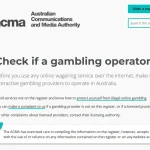
The Australian Communications and Media Authority, or ACMA, oversees compliance with federal interactive-gambling rules and enforces the Interactive Gambling Act. Its tools include asking internet service providers to block websites that offer prohibited gambling services or advertise them in Australia. A domain may therefore become inaccessible through ordinary Australian internet connections after enforcement action.
ACMA’s public enforcement record reports that more than 1,455 illegal gambling and affiliate websites have been blocked since November 2019. This is not a single sweep or a complete map of every site encountered by Australians; it is a cumulative figure associated with enforcement actions. The number conveys the scale of intervention, while the mechanism itself is less dramatic: a request to providers to restrict access.
There is also a reported count of services that have left the Australian market since ACMA began enforcing the rules in 2017. One figure places the total above 210; another places it above 190. Those estimates disagree, so neither should be treated as an uncontested exact count. The disagreement does not change the broader point: enforcement has led some prohibited services to withdraw, while others have faced blocking.
A blocked domain and a withdrawn service are not the same thing. Blocking restricts access to a website through Australian internet providers; withdrawal describes a service ceasing to target or serve the market. Both are part of an enforcement landscape in which offshore operators can be pursued without becoming Australian-licensed businesses.
High-volatility slots in Australia: what to expect
The protection gap
Offshore operators sit outside Australia’s consumer-protection framework for locally regulated gambling services. That is the central practical difference, not a minor detail of website ownership. If a dispute arises, the familiar Australian regulatory route may not apply in the same way, because the operator is beyond the local licensing structure. A polished interface, local currency display or recognisable game name does not bring an offshore business inside that structure.
ACMA’s enforcement material describes both the blocking of prohibited gambling domains and the authority’s role in monitoring compliance. Its account of enforcement is useful for understanding why online casino access can be interrupted, but a block is not a certification of every site that remains reachable. Access and regulatory standing are separate questions.
This matters especially when a page presents a list of “best bonus-buy casinos” as if it were an ordinary consumer comparison. Such wording can obscure the more consequential fact: Australian law does not provide a domestic licensing route for online pokies. A casino bonus-buy feature does not sit in a legal category of its own; it is part of the broader online casino service. The rules concern the service being supplied, not the label attached to a particular game function.
The Australian position therefore resists a simple map of legal local sites on one side and illegal foreign sites on the other. Local operators cannot offer online pokies, while offshore operators are subject to blocking and remain outside Australian consumer protections. Individual players are not penalised merely for playing offshore, but that absence of player liability is not a substitute for oversight of the operator.
There is the boundary, and then the gap beyond it.
Legal Status
Under the Interactive Gambling Act 2001, it is prohibited for operators to provide real-money online casino games, including pokies, to people in Australia.
What a Bonus Buy Changes—and What It Doesn’t
A bonus-buy feature alters the route into a slot’s bonus round. Instead of waiting for the game to trigger that feature during ordinary play, a player may be offered a direct entry option, typically in exchange for a stated price. The appeal is plain: less waiting for a particular part of the game. The cost is plain, too; it becomes part of the decision rather than an incidental detail.
That shortcut changes access, not the underlying nature of the game. Online pokies use a Random Number Generator (RNG), and each spin is a separate random event. A previous result does not make a later result more or less likely, and choosing a bonus entry does not turn chance into certainty. It selects a different way to reach a feature; it does not give control over what happens inside it.
This is the useful distinction behind the phrase “bonus-buy slots”. It describes a feature some games may offer, not a separate category in which outcomes become predictable. The bonus may have its own structure and rules, but the presence of a purchase option does not establish that a session will return its cost. Nor does entering the feature guarantee a particular result. The uncertainty remains.
There is a small cultural tell in the design. A bonus round is often presented as the dramatic centre of a slot, while the ordinary spins become the corridor leading to it. A buy option makes that corridor optional for a price. The interface has turned anticipation into a purchasable choice. It has not removed the house’s dependence on random outcomes.
Video Slots Australia: RNG, Free Play and RTP
The distinction also prevents a common confusion: buying entry is not the same as buying a result. The former concerns when a feature begins; the latter would imply control over its outcome, which the RNG-based nature of play does not support. Any description that blurs those ideas makes the feature sound more decisive than it is.
So the basic answer to what bonus-buy slots are is modest: games with an option to enter a bonus feature directly. The option changes the sequence of play, not the randomness governing spins. That is the whole hinge.
Demo Play and the Limits of What It Can Show
A demo can make a game visible without making its financial conditions visible. It offers a way to encounter a slot’s presentation and controls apart from real-money wagering, where each decision carries a cost. That distinction matters particularly when a game advertises a bonus-buy option: a button or menu item may be easy to notice, while the circumstances governing the game remain less obvious.
In a demo, attention can go to the ordinary business of using the game. The layout, symbols, instructions and pace of play can be observed without treating a session as a wager. If the bonus-buy control appears, its position and the game’s description of it can also be read. This is a narrow but useful kind of familiarity. It can show how the game presents itself; it cannot, by itself, settle what a real-money session at a particular casino will involve.
To check the configured RTP of a game, the in-game information panel is the relevant point of reference, as lobby tiles may not show the specific build selected by the operator.
The distinction is not merely between play that costs money and play that does not. It is also between what a screen displays and what an operator has configured behind it. A lobby tile is a small advertisement for a game, not a record of every setting attached to it. A specialist review reports that the operator selects the RTP build and that the selected figure is not shown on the lobby tile. The in-game information panel is therefore the place to check the configured RTP before wagering. A demo’s appearance should not be mistaken for confirmation of that setting.
This is where the phrase “bonus buy slots demo” can invite an overly broad expectation. A demonstration may help make the interface legible, but it should not be treated as a certificate that every real-money version has identical settings or presentation. The useful question is not whether a demo reproduces everything, but what can actually be inspected within it. Rules and information panels, when available, are more informative than a thumbnail or a prominent control alone.
The same restraint applies to the bonus-buy option itself. Seeing a control in a demo establishes that the displayed game offers a route to the feature in that demonstration. It does not establish the price, settings or availability attached to a real-money version at every operator. Nor does a control that is absent from one screen prove that the game never offers the option: interfaces can place functions in different menus, and a lobby image may show only a fraction of them. The screen is evidence of what is shown, not a complete inventory of every configuration.
3-Reel Slots in Australia: Rules and Play
A demo can still serve a modest practical purpose. It can reveal whether instructions are understandable, whether game information is easy to locate and whether a feature is described in terms that can be followed. Those are matters of presentation, not proof of value. A clear explanation can make a game easier to navigate; it cannot make its financial outcome favourable. Polished design is not a statistical advantage.
There is also a difference between reading a stated setting and observing play. A session may display wins, losses or feature activity, but those events do not explain the underlying configuration. When the question concerns a particular RTP build, the in-game information panel is the relevant point of reference before wagering, rather than the lobby artwork or the impression left by a short demonstration. That is a question of checking, not intuition.
The demo’s proper role is therefore limited but real: it can acquaint someone with the visible game and its controls, and it can make on-screen information easier to examine. It cannot stand in for the terms and configuration attached to a real-money game at a particular operator. Nor should the presence of a buyable feature be confused with evidence that using it improves the game’s underlying prospects. The demo is a window. Not the whole room.
Reading RTP Before Comparing Bonus-Buy Slots
RTP, or return to player, is a theoretical calculation rather than a promise attached to an individual game session. It describes expected performance across a vast number of spins, often millions. That scale is the point: the figure belongs to a long statistical horizon, while any one player encounters only a small slice of it. A percentage printed beside a game can look like a personal forecast. It is not one.
Casino Games: Slots, Pokies and Table Games
The distinction matters when comparing games that offer a bonus buy. RTP may help describe the theoretical return associated with a slot, but it does not say what a particular bonus purchase will return, nor does it settle the outcome of a short run. A higher figure theoretically means a better return over time than a lower one. The phrase “over time” carries most of the weight; remove it, and the claim becomes misleading.
A comparison is therefore useful only when the figures are treated as like-for-like information, not as a ranking of likely sessions. RTP can offer one point of comparison between games, but it cannot make a result predictable. A higher percentage does not mean that a particular spin, feature or buy will pay more than another. The number describes an aggregate expectation, not the order in which wins and losses arrive.
Where the figure appears
A slot’s RTP is usually shown in its rules or paytable. Those sections are less decorative than the lobby artwork and more useful for checking what a number actually belongs to. The figure should be read in the game information rather than inferred from a title, a promotional label or a general description. If two games are being compared, each figure needs to be taken from the rules or paytable for that game.
For bonus-buy slots, the same discipline prevents a category error. A buyable feature may be the reason a game attracts attention, but the presence of that option does not itself establish an RTP. The return figure concerns the slot’s theoretical performance; the feature’s availability is a separate characteristic. Treating the two as interchangeable makes a neat comparison and a poor one.
5-Reel Slots in Australia: Features and How They Work
RTP is also not a description of the experience a player should expect in a particular session. The calculation spreads expected performance across a very large number of spins. A brief sequence can sit far above or below that long-run figure without disproving it. This is not a contradiction. It is the difference between a statistical expectation and an individual outcome.
Using a threshold carefully
A common screening point is an RTP of 96% or higher. It gives comparisons a simple starting line, rather than a guarantee or a verdict. A game below that mark is not thereby described in every respect, and one above it does not promise a favourable session. The threshold is a way of sorting stated figures, not evidence that a player will receive a particular return.
That distinction is especially important around bonus-buy language, which can make a feature sound like a shortcut to a known result. RTP offers no such shortcut. It can indicate which of two stated figures is theoretically higher over the long run, but it cannot tell when a return will occur or what a single play will produce. Statistics are patient. Sessions are not.
The figure is most useful when it is kept in its proper place: a long-run measure for comparison, found in the game’s rules or paytable, and limited in what it can say about an individual outcome. It informs the comparison without settling it. A percentage is not a promise.
How to Identify Slots with a Buyable Bonus
The label “bonus buy” can suggest a standard feature, but it is not a reliable description of every game. Some pokies may provide an option to enter a bonus feature by paying for access; others may offer no such option. The distinction has to be established game by game, rather than inferred from a title, a lobby image or the fact that a game contains bonus rounds.
Identifying Buyable Bonuses
Check Game Information
Open the game’s rules or feature descriptions to look for a specific description of paid bonus entry.
Inspect the Interface
Confirm that the game interface presents a corresponding control or button to purchase the feature.
Verify the Distinction
Ensure the feature is specifically buyable and not just a bonus that can be triggered through ordinary play.
The clearest place to look is the game’s own information: its rules, feature descriptions and any controls shown within the game. These can indicate whether a bonus-entry option exists and explain what it does. A feature merely being described in the rules does not, by itself, establish that it can be bought. A bonus may instead be reached through ordinary play. If the information is unclear, the game should not be treated as one with a buyable bonus.
Read the game, not the tile
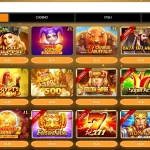
A lobby tile is a thumbnail, not a full specification. It may identify a game without displaying all of its features, and promotional artwork can make a bonus seem more prominent than the available controls warrant. The relevant evidence is inside the game: the information panel and the interface itself. If there is no clearly described option to pay for bonus entry, an assumption based on the title or imagery is just that—an assumption.
This matters because “slots where you can buy the bonus” is not a stable category that can be identified from a theme or a provider name alone. Similar-looking games can handle features differently, and a list assembled without checking each game’s own information risks confusing a bonus that can be triggered with one that can be entered through a separate paid option. The wording matters. So does the distinction behind it.
A practical check is therefore a modest one: open the game information, look for a specific description of paid bonus entry, then confirm that the game interface presents the corresponding option. The presence of free spins, a bonus round or other special features is not enough to establish that a player can buy access to them. Nor does a general description on a casino page settle what the individual game makes available.
7-Reel Slots in Australia: How Each Spin Works
Keep separate settings separate
The same care applies to other details shown around a game. A specialist review reports that operators can select different RTP builds and that the chosen configuration may not be shown on the lobby tile. That is a separate question from whether bonus entry is offered. The game’s own information panel is where the configured RTP should be checked before wagering; a visible bonus-buy control does not answer it.
This is why broad searches for games with a buyable bonus can produce a misleadingly confident picture. A game name alone does not establish which options are enabled in a particular version, while a casino’s catalogue description may not show the in-game controls. Identification depends on the specific game presentation, not on a general reputation attached to the title.
In Australia, there is an additional distinction between describing a feature and treating its availability as an invitation. Online casino games are prohibited services when offered to people in Australia, and offshore access is subject to enforcement. A neutral description of how to recognise a feature does not change that setting. Nor does an in-game button make a feature a sensible or lawful local offering.
Free Play, Free Spins and the Meaning of “Free”
“Free” can describe two quite different things in a search for bonus-buy pokies. It may refer to a version of a game that can be tried without wagering real money, or to free spins awarded as part of play. The shared word conceals a difference in timing and purpose: one describes how a game is accessed; the other is a feature within the game.
Do
- Distinguish between free-play modes and in-game free spins
- Check the game’s own displayed information for feature availability
Don’t
- Assume a “free” label guarantees a cost-free bonus-buy experience
- Treat free spins as synonymous with no-deposit offers
A free-play version is not automatically a promise of a particular bonus-buy function. Whether a trial version includes the same controls or features as another version depends on how that game is presented. The label alone does not establish that a bonus can be activated without a stake, or that a feature available in paid play is also available in a trial. “Free” is doing several jobs at once.
Free spins, by contrast, are game outcomes or features. They are not the same thing as a free-play session, and the word does not by itself mean that every part of play costs nothing. A game may award spins after a specified event, while the game itself is still being played in a wagering context. The distinction matters because a search for free bonus-buy play can lead to descriptions of either access arrangements or in-game rewards.
Sweet Bonanza offers a concrete example of the second meaning. A specialist review reports that four or more scatter symbols award 10 free spins in the game. That is a description attributed to that review, not a guarantee about every version or presentation. The detail concerns a feature triggered within Sweet Bonanza; it does not mean that the game is available as a cost-free bonus-buy experience.
Nor should “free spins” be read as a synonym for a no-deposit offer. The phrase identifies spins associated with a game feature, whereas an offer would have its own conditions and rules. Those are separate categories, even when promotional language places them close together. A free-play label, a scatter-triggered feature and an account-level offer are not interchangeable.
This distinction also clarifies what “buy bonus slots free” might mean in ordinary language: a person could be looking for a trial version of a game that has a buyable feature, or for spins awarded without a purchase of that feature. The wording does not settle which meaning applies. Only the game’s own displayed information can show what that particular version provides.
Free, then, is not a single playing condition. It may describe a mode, a feature or an offer, each with a different relationship to wagering. Small word. Large ambiguity.
Low-Volatility Slots in Australia: What the Term Means
Online Bonus-Buy Pokies and Where They Are Available
Online availability does not mean local availability. Sweet Bonanza is described in a specialist review as being available to Australian players only through offshore-licensed casinos. That distinction matters: the game may appear in an online catalogue, but it is not thereby an offering from an Australian-licensed casino.
Australia’s rules draw a line around who may provide online pokies. The Interactive Gambling Act 2001 prohibits locally licensed operators from offering them to people in Australia. Offshore services sit beyond that local licensing framework, and the Australian Communications and Media Authority can seek to have prohibited gambling sites blocked. A listing, then, is not the same thing as a stable or locally regulated route to a game.
This is a practical limit on searches for bonus-buy pokies in Australia. The words may suggest a familiar local product category; the available route described for Sweet Bonanza is instead offshore. That does not make every online catalogue equivalent, nor does it turn an offshore licence into Australian authorisation. The location of the operator matters as much as the game’s name.
There is also a gap between a game being listed and a player being able to reach it. ACMA enforcement includes blocking access to websites that provide prohibited interactive gambling services or advertise them. The agency has blocked more than 1,455 illegal gambling and affiliate websites since November 2019. The figures on services leaving the market are reported differently: one account puts the total above 210 since 2017, while another says more than 190. The discrepancy is a reminder that the online landscape is not a fixed shelf.
For Sweet Bonanza, the offshore-only description should therefore be read narrowly: it concerns where Australian players may encounter the game, not a promise that a particular site will remain accessible or that the game is locally offered. Nor does the presence of a bonus-buy label change the legal status of the service providing it. A feature name cannot confer jurisdiction.
The broader search for online bonus-buy games runs into the same distinction. A game can be designed for online play and appear in offshore catalogues, while Australian law still prevents local operators from offering online pokies. Availability here is a matter of jurisdiction, not merely of whether a title has been placed on a screen.
Progressive Jackpot Slots: How Pools and Prizes Work
A Demo Run Is Not a Forecast
A free-play session can produce a sequence that feels persuasive: a feature appears several times, a run of wins follows, or the screen stays quiet for longer than expected. None of those patterns establishes what a later spin will do. In pokies, each spin is a separate random event generated by a Random Number Generator, independent of the spins before and after it.
That independence is easy to accept in principle and harder to feel while watching outcomes arrive one by one. A cluster of wins can look like momentum; a long dry spell can seem to make a win overdue. Neither impression changes the next spin. The machine does not remember the previous result, and a free-play record does not turn randomness into a schedule.
This matters when a demo includes a bonus-buy option. Seeing a feature appear, or seeing it produce a particular result, says what happened in that session—not what a later session will repeat. The same applies to free demo slots with bonus-buy features: a short run can show the interface and an instance of play, but it cannot serve as a sample of the next sequence. “Sample” is doing generous work there.
A small set of outcomes is also easy to overread. A striking win can dominate memory, while ordinary results blur together. That makes a session feel more revealing than it is. It may offer an account of what occurred, but not a dependable forecast of what will occur next. More spins would create a longer record, not a promise about any particular outcome.
The distinction is useful because free play and real-money play can invite the same mistaken inference: that recent results contain a clue to the next one. They do not. A bonus-buy demo run cannot establish that a feature is becoming more likely, that a quiet stretch is about to end, or that a previous outcome will recur. It records events; it does not announce future ones.
Demo Limitations
A demo session records past events but cannot serve as a forecast for future outcomes due to the nature of Random Number Generators.
The cleanest reading of a demo is therefore a modest one. It can show a session as it unfolded. It cannot tell the story of the session that has not happened.
Sweet Bonanza’s Bonus Feature, in Brief
Sweet Bonanza’s feature sequence centres on scatters, free spins and multiplier bombs. A specialist game review reports that landing four or more scatter symbols awards 10 free spins. That is a description of the version covered by that review, not a promise that every casino’s copy will behave identically. Game settings and displayed rules matter; the symbol count alone is not a universal contract.
During the free-spin round, multiplier bombs may appear. The same kind of specialist review describes their values as being added together before the resulting multiplier is applied to a winning tumble. In other words, the bombs do not simply act as separate prizes that can be read in isolation: their combined value is used against the tumble that wins. The feature’s appeal lies in that sequence, but its order is not evidence of a predictable payout.
A tumble is the winning event to which the accumulated multiplier applies. If no winning tumble is present, the described multiplier does not establish a return on its own. Nor does a free-spin round promise that bombs will appear, or that a particular combination will recur. The feature gives the game another way to resolve wins; it does not turn outcomes into a schedule.
That distinction is easy to lose in the language of slot features. A trigger can be described precisely while the result remains uncertain. The number of scatters associated with entry and the treatment of multiplier values explain how the bonus works, not how often it will arrive or what it will pay. The review’s account is useful as a map of the sequence, rather than as a forecast.
Live Baccarat Online in Australia: Legal Context
For a game labelled Sweet Bonanza, the practical detail is therefore the displayed feature rules in the version being played. The review describes one configuration; the in-game information is the relevant account for the particular copy. A bonus feature can be intricate without becoming a promise. Modest distinction.
Choosing a Slot by Its Stated RTP, Not Its Promise
A slot’s title, bright lobby tile or bonus-buy label cannot establish which return setting is in use. Sweet Bonanza illustrates the distinction: a specialist review reports an RTP of 96.51% for the version it assessed, but that figure is not a guarantee that every release carries the same setting. It belongs to a particular account of a particular build, not to the fruit-themed name in perpetuity.
The operator selects the RTP build, and the lobby tile does not disclose which one has been loaded. The relevant information is inside the game: its rules, paytable or information panel. The figure shown there should be checked before any wagering. A mismatch between a familiar published number and the in-game display is not a mystery to solve by trusting the more appealing figure. The displayed configuration is the one that matters for that version.
This distinction also puts claims about a “best” slot into perspective. A bonus-buy feature may affect how a bonus round is reached, but the feature’s presence does not identify the RTP setting. Nor does a game’s reputation tell anything reliable about the build selected by a particular operator. The comparison must begin with the stated figure, then remain attached to that specific configuration.
RTP is not a promise about what a session will return, and a higher stated percentage cannot settle every question about a game. It is one measurable point of comparison, not a forecast dressed as certainty. In Australia, online casino-style games are prohibited services when offered to people in the country, despite the fact that individual players are not penalised for using offshore sites. That legal setting is part of the picture, not a footnote.
A label can travel. A configuration can change. The in-game figure is the check that keeps the two apart.
Can Australian players legally play Sweet Bonanza?
Australian players are not penalised simply for playing offshore, but Sweet Bonanza is available to them only through offshore-licensed casinos. Australian operators cannot legally offer online pokies, and offshore sites are outside Australian consumer protections.
How are free spins triggered?
In Sweet Bonanza, four or more scatter symbols usually award 10 free spins.
How is the RTP of slots calculated?
RTP is a theoretical statistical calculation of a slot’s expected returns over a very large number of spins, often millions. The game’s rules or paytable usually display its RTP.
How do you calculate RTP in slots?
RTP is calculated statistically across a very large number of spins, often millions, to estimate the game’s theoretical return. It is not a prediction of what a player will win in an individual session.
Games

3-Reel Slots in Australia: Rules and Play
A three-reel layout offers a familiar compact display, while each game's paytable and instructions determine...
5-Reel Slots in Australia: Features and How They Work
A five-reel layout describes the columns, while features, paytable RTP and random outcomes shape how...

7-Reel Slots in Australia: How Each Spin Works
The reel count shapes the display, while RNG selects each result independently and RTP describes...

High-volatility slots in Australia: what to expect
High volatility means larger payouts are infrequent and quiet stretches can last, rather than signalling...

Low-Volatility Slots in Australia: What the Term Means
Low volatility points to a tendency toward frequent, smaller wins, not a fixed timetable or...

Pokie Machines in Australia: Rules, Odds and Risks
A practical look at machine mechanics, free-play limits and the legal and financial risks of...

Progressive Jackpot Slots: How Pools and Prizes Work
Progressive games vary in how wagers fund a pool, how prizes trigger and what rules...

Best RTP Slots in Australia: How RTP Works
RTP is a long-run statistical expectation; game versions, variance and Australia's legal context all shape...

Video Slots Australia: RNG, Free Play and RTP
A practical look at random outcomes, free-play observations and the information paytables and RTP can...

Casino Dice Games in Australia: Rules and Legality
This guide separates game mechanics, odds and live formats from the legal question of whether...

Crash Casino Games in Australia: Risks and Rules
Crash games turn a rising multiplier and a timed cash-out into a wager, but neither...
Lightning Link Online Pokies in Australia: What to Know
The original game is played on venue machines; online pages using its name do not...

Live Baccarat Online in Australia: Legal Context
Australia has no locally licensed online casino market; this guide explains the legal distinction and...

Live Blackjack Online in Australia: Legal Guide
Australia has no locally licensed online casino route; the article separates legal boundaries from claims...

Live Roulette in Australia: Rules and Dealer Claims
It distinguishes Australia’s regulatory position from claims about dealers, bonuses, odds and roulette strategies. Online...
Mines Casino Game in Australia: How It Works
The guide places Mines mechanics alongside free-play limits, bonus conditions, offshore access and questions about...

Plinko Casino in Australia: Legal Risks and Formats
The guide separates game formats from offshore real-money services and examines claims, payment terms and...

Pokies Tips and Tricks: What Actually Matters
A practical look at independent spins, bonus conditions and session budgets, without claiming any tactic...

Real Money Casino Table Games in Australia: Rules
The guide covers Australia's online gambling restrictions alongside table formats, player decisions, odds and the...