Litecoin casinos in Australia: legal limits and claims
 Available in AU
Australian rules focus on services offered to people in the country, while currency and offshore licensing do not establish authorisation.
Table of Contents
- Online Casinos and the Australian Legal Boundary
- What “Best” Can—and Cannot—Mean for Litecoin Casinos
- Bonus Claims Without a Verifiable Offer
- Slots, Bonuses and the Limits of What Can Be Confirmed
- Casino Payments in a Country Built Around Switching Methods
- Playing with Litecoin: The Missing Verification
- Acceptance Claims and the Offshore Casino Question
- Deposits, Withdrawals and Identity Checks
- Live Dealers and Litecoin: No Confirmed Connection
- Litecoin Slots and the Evidence Gap
- Payments
Online Casinos and the Australian Legal Boundary
Australia draws a distinction between the conduct of an online casino operator and the conduct of an individual who encounters an offshore site. Under the Interactive Gambling Act 2001, operators must not provide real-money online casino games to people physically located in Australia. That prohibition covers casino-style services, including games commonly presented as table games or pokies. The legal question is therefore not settled by where a company is based, what currency it accepts or how its website describes itself. The relevant point is that the service is offered to people in Australia.
This places an offshore casino in a different position from a locally available entertainment service. A foreign operator may describe itself as licensed elsewhere, but that does not create permission to provide prohibited interactive gambling services to Australians. Nor does the appearance of a site on the internet change the Australian rule. Online reach and legal authorisation are separate things; the first has never been a dependable substitute for the second.
The Act is directed at providers. It does not explicitly make an individual’s use of an offshore site a criminal offence. That distinction matters, but it should not be mistaken for an endorsement or a guarantee of protection. A player’s position is not the same as an operator’s, and the fact that the law places the prohibition on providers does not turn an offshore casino into a lawful Australian service.
There is another consequence that is less visible than the prohibition itself. Australian consumer law does not protect players who use offshore casinos. If a dispute arises over access, an account, funds or a service promised by an operator, the ordinary expectations attached to a domestic consumer transaction may not apply. A foreign licence, where one exists, belongs to a different regulatory system. It does not bring the operator within Australian consumer protections.
Casinos That Accept Mastercard in Australia: What to Know
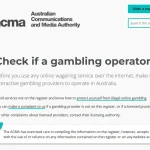
The Australian Communications and Media Authority, or ACMA, is responsible for enforcing the Interactive Gambling Act. Enforcement is part of the legal boundary, not a footnote to it: offshore casino services are actively blocked and the rules are enforced. A site being mentioned online, or appearing to load at a particular moment, is not evidence that it has been approved for Australian customers. Availability can be uneven and may change; legality does not follow the state of a browser window.
That is why phrases such as “Litecoin casino in Australia” can be misleading if read as a statement about legal status. They may describe a search for an offshore service, but they do not establish that the service may lawfully offer real-money casino games to people in Australia. The same applies if a site advertises a particular payment method or presents itself as mobile-friendly. Those are claims about how a business says it operates, not an exception to the Act.
Casinos That Accept PayID in Australia: What’s Verified
The distinction also resists a familiar digital-era assumption: that a new technology makes an old rule irrelevant. Cryptocurrency can alter how a transaction is represented or transferred, but the legal category at issue remains the provision of online casino gambling to Australians. A service does not become lawful because it accepts Litecoin, any more than a foreign address or a polished interface changes the audience to whom it is offered.
There is no contradiction in saying both that players are not explicitly criminalised for using offshore sites and that those sites are not lawful providers of casino games to Australians. The first statement concerns the individual’s exposure under the Act; the second concerns the operator’s prohibited conduct. Conflating them either exaggerates the player’s legal liability or understates the restrictions on operators. Neither reading is useful.
The boundary is unusually plain, even if the internet makes it easy to blur. Australian law prohibits operators from offering real-money online casino games to people in the country, and ACMA enforces that framework. An offshore site’s visibility, its claims about licensing, or its acceptance of a particular currency cannot by themselves alter that position. For Australians, the practical fact of encountering a service and the legal status of that service remain separate matters. Visibility is not permission.
What “Best” Can—and Cannot—Mean for Litecoin Casinos
For Australian players considering Litecoin casinos in 2026, it is worth checking both payment availability and the operator details before choosing where to play. The information below highlights the facts available for each operator; it does not confirm Litecoin support.
1. MrPacho
Payout speed: crypto 30-120 minutes, fiat 24-72 hours · Min. deposit: A$30
MrPacho lists a A$30 minimum deposit. Its stated payout times are 30–120 minutes for crypto and 24–72 hours for fiat.
2. Rollero Casino
License: Curacao Gaming Control Board OGL/2023/176/0095 (Hollycorn N.V.)
Rollero Casino is listed under Curacao Gaming Control Board licence OGL/2023/176/0095, held by Hollycorn N.V.
3. Neospin
License: Curacao Gaming Control Board OGL/2023/176/0095 (Hollycorn N.V.)
Neospin is listed under Curacao Gaming Control Board licence OGL/2023/176/0095, held by Hollycorn N.V.
4. LevelUp Casino
License: Curacao eGaming OGL/2023/174/0082 (Dama N.V.) · Min. deposit: A$15
LevelUp Casino is listed under Curacao eGaming licence OGL/2023/174/0082, held by Dama N.V. Its minimum deposit is A$15.
5. SkyCrown
License: Tobique Gaming Commission · Payout speed: crypto ~10-15 minutes, fiat 1-5 days · Min. deposit: A$30
SkyCrown is listed under the Tobique Gaming Commission. Its stated crypto payout time is around 10–15 minutes, while fiat payouts take 1–5 days; the minimum deposit is A$30.
6. SpinsUp
License: Curacao Gaming Control Board OGL/2023/174/0082 (Dama N.V.)
SpinsUp is listed under Curacao Gaming Control Board licence OGL/2023/174/0082, held by Dama N.V.
7. Vegaz Casino
License: Curacao OGL/2024/1335/0780 · Min. deposit: EUR 20
Vegaz Casino is listed under Curacao licence OGL/2024/1335/0780. Its stated minimum deposit is EUR 20.
8. Kingmaker
Payout speed: crypto ~90 minutes, fiat 1-5 days · Min. deposit: A$30
Kingmaker lists a A$30 minimum deposit. Its stated crypto payout time is around 90 minutes, while fiat payouts take 1–5 days.
9. WinSpirit Casino
License: Curacao eGaming OGL/2024/923/0383 (Antillephone N.V.) · Min. deposit: A$30
WinSpirit Casino is listed under Curacao eGaming licence OGL/2024/923/0383, held by Antillephone N.V. Its minimum deposit is A$30.
10. Uptown Pokies
License: Curacao (operating since 2017) · Min. deposit: A$20
Uptown Pokies is listed as operating under a Curacao licence since 2017. Its stated minimum deposit is A$20.
“Best” sounds like a verdict, but it often arrives without the evidence a verdict requires. Applied to an online casino said to accept Litecoin, the word could refer to the operator, its payment arrangements, its terms, or the experience it claims to offer. Those are different questions. A single label cannot answer them all.
A meaningful comparison would begin with a clearly identified operator and details that can be checked against its own published terms. The payment claim would need to be specific: does the operator say Litecoin is accepted, and under what conditions? A mention of cryptocurrency somewhere on a site would not establish that Litecoin is supported, or that the method is available to people in Australia. Nor would a general claim about speed or convenience establish what happens in practice.
The same care applies to the word “online.” A casino’s site may be visible from Australia without that visibility settling whether the operator may lawfully provide its service here. Under the Interactive Gambling Act 2001, operators may not provide real-money online casino games to people physically located in Australia. The Australian Communications and Media Authority enforces that law. Australian consumer law does not protect players who use offshore casinos. Access and legal standing are not synonyms.
Legal Boundary
Under the Interactive Gambling Act 2001, operators must not provide real-money online casino games to people physically located in Australia.
That distinction makes a ranking especially awkward. If a page calls one site the best Litecoin casino online, the ranking might be read as an endorsement of a service that Australian law prohibits operators from providing to people here. A list of names would not fix the problem; it could make the endorsement more direct. It would also imply that each named operator’s Litecoin arrangements had been established and compared.
There is a more modest and more honest meaning for “best”: a standard of proof. A claim deserves weight only when its subject is identifiable, its terms are clear, and its supporting details can be assessed. If those elements are absent, “best” is decoration, not an evaluation. The distinction is plain. The consequences are not.
A responsible comparison would also separate what is claimed from what is demonstrated. An operator may describe a payment method in broad terms, while the conditions that govern its use sit elsewhere or are unclear. Without a verifiable account of the relevant terms, it is not possible to compare one service with another on that basis. Ranking them anyway would turn uncertainty into a score.
Casinos That Accept MiFinity in Australia: What’s Known
Searches for a live casino or pokies site that accepts Litecoin bring together several ideas, but their combination does not prove that any particular service fits them. A phrase can express what someone hopes to find; it cannot establish that a service exists, that its payment claims are accurate, or that it is lawful to offer in Australia. That gap matters more than the confidence of the wording.
The adjective can also conceal a choice of values. One ranking might privilege a payment claim; another might privilege an operator’s reputation or the clarity of its terms. Unless the basis is stated and supported, readers cannot tell whether “best” means safer, clearer, more accessible, or merely more prominently promoted. A polished table may look precise while leaving the central questions unanswered.
None of this makes a ranking reliable simply because it is cautious in tone. A disclaimer cannot turn an unsubstantiated comparison into a verified one, and a familiar payment label cannot establish an operator’s legal position. In Australia, the legal boundary is not a minor footnote to a casino ranking. It changes what such a ranking can responsibly present.
Do
- Verify the operator’s published terms
- Check specific conditions for Litecoin
- Use an identifiable and transparent method of proof
Don’t
- Rely on the label “best” as a verdict
- Assume visibility means legal authorization
- Trust polished tables without supporting details
So “best” can mean a transparent method applied to substantiated information. It cannot, on its own, mean that an online casino accepts Litecoin, that its claims have been checked, or that Australians may lawfully use it. Without those distinctions, the superlative does the work of evidence while supplying none. A neat answer, perhaps. Not a sound one.
Bonus Claims Without a Verifiable Offer
Bonus language can make a Litecoin casino appear to offer something concrete: an extra balance, a welcome reward or a recurring perk. Yet a headline is not the offer itself. Without terms tied to an identifiable operator and a current promotion, the language says little about what a person would actually receive—or whether the promotion is available to Australians at all.
That distinction matters because a bonus is not simply a number added to a balance. Its meaning depends on conditions: who qualifies, what activity is required, which payment methods count, when the offer ends and whether winnings can be withdrawn. These details can change the practical value of a promotion entirely. A large-sounding figure, detached from its conditions, is mostly decoration.
The phrase “best Litecoin casino bonus” carries an implied comparison. But a comparison requires a stable basis: offers that are current, terms that can be checked, and a clear account of which operators are being compared. Without those elements, “best” functions as an advertising adjective rather than a useful finding. The same problem follows when several bonuses are described as the best available: a plural claim does not become more reliable through repetition.
There is also a difference between a bonus being mentioned and its being available. A page can retain old promotional language after an offer has changed or disappeared. A third party may summarise terms incompletely; an operator may impose eligibility conditions that are easy to miss in a headline. In either case, the wording can survive longer than the deal it once described. Promotional copy is not a dependable calendar.
Casinos That Accept Bitcoin in Australia: Legal Context
The cryptocurrency label can add another layer of apparent specificity. A bonus described alongside Litecoin may suggest that the coin is accepted for a qualifying deposit, or that the offer has been designed for cryptocurrency users. Neither follows from the wording alone. A promotion’s payment conditions must be explicit, and the presence of a coin’s name beside a bonus does not establish that the two are connected.
For Australians, the promotional framing sits within a more serious legal setting. The Interactive Gambling Act 2001 makes it illegal for operators to provide real-money online casino games to people physically located in Australia. Advertising real-money online casinos to Australian audiences is also prohibited. A bonus claim does not alter that boundary or turn an unlawful service into a lawful one. Australian consumer law does not protect players who use offshore casinos.
This makes the language of “latest” offers especially slippery. A recent-looking page is not proof that a promotion remains active, that its terms have not changed, or that it may lawfully be presented to Australians. Date labels and confident phrasing can create a sense of immediacy without establishing any of those things. New wording is not the same as verified substance.
Even the familiar idea of a “welcome” reward carries an assumption: that there is a legitimate, accessible offer waiting for a new customer. In this context, that assumption should not be smuggled in as fact. A bonus claim may be a fragment of marketing, a description of an offer for a different jurisdiction, or simply language repeated across pages. The wording alone cannot settle which.
Attention A bonus claim is not the offer itself; its value depends on conditions such as eligibility, activity requirements, and withdrawal rules.
The social purpose of a bonus is plain enough. It gives a commercial proposition the shape of a gift, though its value depends on rules set by the business making the offer. That does not make every promotion false; it does mean the headline cannot stand in for the conditions. A claim without those conditions is not a usable description.
So searches for Litecoin casino bonuses may produce plenty of persuasive phrasing, but persuasion is not verification. In Australia, the legal restriction is not softened by cryptocurrency, promotional language or a promise of extra value. The bonus is the bright wrapper. The boundary remains.
Slots, Bonuses and the Limits of What Can Be Confirmed
A phrase that joins Litecoin, pokies and a bonus compresses three separate claims into one. It suggests a payment method, a kind of game and a promotional benefit, as though their appearance together in a description settled how they relate. It does not. Each part would need to be understood on its own, and the combination cannot be treated as proof that a particular service is available to people in Australia.
The distinction matters because “Litecoin” may be used as a label for a payment option, while “slots” describes a game format and “bonus” describes an incentive. Those words do not, by themselves, show that the same operator provides all three, that the promotion applies to those games, or that a player can meet its conditions. A welcome offer, for instance, is not interchangeable with a deposit-free promotion: the wording points to different conditions, even before any terms are considered. The label is not the offer.
POLi Casinos in Australia: What Can Be Verified
“Free” is particularly slippery. In ordinary speech, it sounds like an absence of cost. In gambling promotions, it can instead refer to a benefit subject to eligibility rules or other conditions. Without clear terms, the word alone says little about what a person would receive, what they would have to do, or whether winnings could be withdrawn. A polished phrase can make a complicated arrangement look frictionless. The language is cheaper than the arrangement.
Nor does a reference to video pokies identify a particular game or establish that a game can be played with Litecoin. A catalogue description, a payment claim and a promotional banner are different pieces of information. Treating them as one can turn a loose association into an apparent promise: that a certain game is included, that a bonus covers it, and that the payment method works for the relevant activity. None follows automatically from the wording.
There is also a legal boundary that the promotional language cannot smooth away. Under the Interactive Gambling Act 2001, operators may not provide real-money online casino games, including pokies, to people physically located in Australia. The prohibition concerns the service being offered, not whether a page calls a promotion a welcome gift, a no-deposit bonus or a free-play opportunity. Litecoin does not alter that position. A different payment label cannot change the character of the game.
The law places the obligation on operators, rather than making an individual player’s use of an offshore casino a criminal offence. That distinction does not turn an offshore offer into a protected or lawful local service. Australian consumer law does not protect players who use offshore casinos, and a promotional claim does not supply that protection. Attractive wording and legal standing are separate matters.
Australian consumer law does not protect players who use offshore casinos, and the use of cryptocurrency does not alter this legal position.
The combined idea of Litecoin-funded pokies with a bonus can therefore be read as a bundle of questions, not as a single established feature. Is the promotion tied to a deposit? Does it apply to the games described? What conditions attach to it? Does the operator offer the underlying service to people in Australia? These are not minor footnotes to a slogan. They determine what the slogan could mean.
A search phrase may place “best,” “free,” “welcome” and “no deposit” beside the same game category, but those terms do not make one another true. Nor does repeating the same association across promotional pages make it more substantial. In a market where real-money online casino games are prohibited for operators to provide to Australians, the distinction between a tempting description and a service that can lawfully be supplied is not fine print. It is the central distinction.
Casino Payments in a Country Built Around Switching Methods
Australia’s everyday payment culture is built less around loyalty to one instrument than around changing methods to suit the moment. Contactless card payments are part of ordinary life across the country, and mobile wallets such as Google Pay and Apple Pay are similarly widespread. A purchase can begin with a card, move to a phone and, in another setting, pass through a service connected to a bank, such as PayPal. Switching has become unremarkable.
That habit shapes how people think about digital money. Litecoin may appear in the same mental category as a card or wallet: another way to move value, potentially useful where a familiar method is inconvenient. But those categories are not interchangeable. A payment method common in shops is not thereby available for online gambling, and the broad use of mobile wallets says nothing about whether a particular gambling service supports them—or supports Litecoin.
Casinos That Accept Bitcoin Cash in Australia
The distinction matters because payment habits are formed in a different landscape from online casino rules. Australians may be comfortable shifting between established channels, but that comfort does not make every service lawful or locally protected. Real-money online casino games are prohibited for operators serving people in Australia under the Interactive Gambling Act 2001. Australian consumer law does not protect players who use offshore casinos. A modern-looking payment option does not alter either point.
There is a quiet cultural contrast here. The country has readily adopted contactless payments and phone-based wallets, while the legal framework draws a firm line around online casino services. Convenience can travel quickly; legal protection does not travel with it. A digital currency may sound like an extension of the same payment flexibility, but the comparison stops at the idea of moving money.
That leaves Litecoin outside the ordinary pattern of switching, at least as far as any specific casino payment arrangement is concerned. Familiarity with cards, wallets and bank-linked services cannot establish that a casino accepts a cryptocurrency. Nor does the presence of a payment label settle what service is being offered, to whom, or under what protections. The method and the setting are separate questions.
This is why a Litecoin casino payment should not be treated as merely another choice on a familiar Australian checkout menu. The country’s everyday habits explain why multiple ways to pay feel natural; they do not verify a casino’s claims or make offshore play a consumer-protected activity. Payment culture is flexible. The boundary is not.
Everyday Payment Culture
Australia is accustomed to switching between contactless cards, mobile wallets like Google Pay and Apple Pay, and services like PayPal. However, this flexibility in retail does not extend to the legal status of online casino services.
Playing with Litecoin: The Missing Verification
A Litecoin balance and a playable casino account are not the same thing. The first is a cryptocurrency holding; the second would require an operator to accept that asset, credit an account, and permit access to games. A statement that Litecoin is supported does not, by itself, establish that whole sequence for someone in Australia.
That distinction matters because searches for playing casino games with Litecoin can make a payment method sound like a route into gameplay. Without that link, a label such as “Litecoin casino” says little about what a service actually permits.
There is also a more consequential boundary. Under the Interactive Gambling Act 2001, operators cannot provide real-money online casino games to people physically in Australia. That includes casino-style games such as poker, blackjack, roulette and pokies. The law targets the provider; it does not make an offshore service lawful merely because it accepts cryptocurrency. Nor does a payment method turn prohibited online gambling into an authorised service.
The phrase “no-KYC” can sound like a promise that identity checks will be absent. It should not be treated as proof of how an account works. Online casinos generally require customers to complete identity and customer checks before financial transactions. A claim about avoiding those checks cannot establish that deposits, withdrawals or play will be available, and it does not remove the legal position of an operator serving Australians.
Even the mechanics of using Litecoin would need to be clear before the phrase “play with Litecoin” had a precise meaning: whether the asset is accepted at all, how an account balance is recorded, and whether that balance can be used for gameplay. Those are separate questions, not details that can be safely inferred from a logo or a brief payment claim. No shortcut there.
Casinos That Accept Visa in Australia: What to Know
For people in Australia, the central issue is not whether a cryptocurrency can be transferred in general. It is whether an online casino may lawfully offer real-money games to residents and whether any claim of access accurately describes the service. Australian consumer law does not protect players using offshore casinos. A convenient-sounding payment route cannot supply that protection, or change the operator’s obligations under Australian law.
So “playing with Litecoin” remains an unverified connection between an asset and a form of gambling that operators are prohibited from providing to people in Australia. The wording may suggest a simple transaction. The reality is less tidy.
Acceptance Claims and the Offshore Casino Question
A statement that an online casino accepts Litecoin is a statement about a payment method, not about its standing under Australian law. It cannot turn an offshore service into a lawful one, or establish that Australian residents may be offered its games. The distinction matters because the Interactive Gambling Act 2001 addresses the operator’s conduct: offering online casino games to people in Australia is prohibited.
That leaves two separate questions where a claim about a casino with Litecoin might otherwise blur them together. One concerns whether a service actually supports the currency; the other concerns whether that service may lawfully offer casino gambling to people physically located in Australia. An affirmative answer to the first does not answer the second. The coin is not a licence.
Payment vs Legality
Acceptance of Litecoin is a statement about a payment method, not a confirmation of legal standing under Australian law.
The law also draws a distinction between the operator and the individual. The Act does not explicitly criminalise a player for using an offshore casino. That does not make the service lawful, nor does it give the player the protections that accompany a locally regulated consumer transaction. Australian consumer law does not protect people using offshore casinos. In practice, a payment claim says nothing about the remedies available if an account is disputed or a service becomes inaccessible.
The Australian Communications and Media Authority enforces the Act. Its role belongs to the regulatory framework, not to the marketing language attached to a Litecoin casino test, a mobile site or an app. A website’s description of its payment options cannot establish that it is authorised to offer real-money casino games in Australia. Nor does a label such as “crypto casino” change the legal character of the service.
This is why acceptance claims should be read narrowly. They may describe a proposed or advertised way to move value; they do not settle questions of lawful operation, access, or consumer protection. Offshore sites may present themselves as available, but availability is not permission. Australian law places the prohibition on operators offering these games to people in the country, while enforcement sits with ACMA.
The distinction is less dramatic than a banner promising a new payment route. It is also more important. Litecoin does not alter the boundary between an offshore operator’s offer and the rules that govern that offer in Australia. A payment method cannot confer legitimacy.
Casinos That Accept Neosurf in Australia: What to Check
Deposits, Withdrawals and Identity Checks
A deposit and a withdrawal are separate parts of a transaction, not opposite buttons on a guaranteed path. A cashier may display a payment option, but that alone does not establish that Litecoin can be used to fund play, that winnings can be returned in Litecoin, or that either transaction will be processed instantly. The same distinction matters when a site describes itself as an LTC casino: a label is not evidence of a working route for money in and out.
Online casinos commonly require customers to pass a Know Your Customer (KYC) assessment before carrying out financial transactions. The check is part of the account relationship, not an afterthought that necessarily appears only when a withdrawal is requested. A payment method’s advertised speed therefore cannot, by itself, settle how long the full process will take. Identity checks and payment processing are distinct steps.
Casinos That Accept Neteller in Australia
The sequence also matters. A deposit might be accepted while a later withdrawal faces separate conditions, or the cashier might not support the same method in both directions. Without operator-specific terms, claims of an instant Litecoin withdrawal or a fast Litecoin payout cannot be treated as a practical expectation. “Instant” is a particularly tidy word for a process with more than one gate.
A no-deposit label does not answer these payment questions either. It says nothing by itself about whether Litecoin is accepted for deposits or withdrawals, or about the conditions attached to any funds. Bonus language should not be mistaken for a description of a cashier.
There is a broader consequence in Australia. The Interactive Gambling Act 2001 prohibits operators from providing real-money online casino games to people in the country, and Australian consumer law does not protect players who use offshore casinos. A smooth-looking cashier does not change either point. Nor does completing an identity check turn an offshore service into a locally protected one.
Financial Process Reality
- Deposit and withdrawal are separate transactions with different potential conditions
- KYC identity checks are part of the account relationship, not just withdrawal steps
- No-deposit labels do not verify the availability of Litecoin routes
- A smooth cashier interface does not grant local legal protection
The practical record of a transaction would need to be established through the operator’s own current payment terms and account process; a search phrase or promotional label cannot substitute for that. Where those details are unclear, the responsible reading is not that a Litecoin route exists, but that the route remains unestablished.
Live Dealers and Litecoin: No Confirmed Connection
A live-dealer format and Litecoin payment are distinct features, not proof of one another. Describing an online casino as offering a human-presented table game says nothing, by itself, about how it handles cryptocurrency. Likewise, a Litecoin label does not establish that live-dealer games are available. No confirmed connection between the two can be stated.
That distinction matters in Australia for a reason beyond the cashier. Under the Interactive Gambling Act 2001, it is illegal for operators to provide real-money online casino games to people physically in Australia. Casino-style table games are within that prohibition. A foreign payment option does not alter the rule, and calling a service a live-dealer platform does not place it outside the law.
Casinos That Accept PayPal in Australia: What to Check
The language of digital entertainment can make the arrangement sound almost ordinary: a dealer appears on screen, a table game unfolds, and a cryptocurrency is presented as a way to pay. But polished presentation is not legal status. Nor does it establish that the operator is authorised to serve Australians. Offshore casino services are actively blocked and enforced against; Australian consumer law does not protect players who use offshore casinos.
There is a particular neatness to the phrase “live dealer”: it suggests a familiar room, translated into a stream. The setting may look social, but the legal question remains about the service being provided to someone in Australia. Litecoin is simply a separate payment claim. Combining the two labels cannot make prohibited provision lawful.
So the pairing should not be treated as a confirmed, usable option for Australian residents. A description of games and a statement about cryptocurrency would each need to be established independently—and neither would override the Australian prohibition on operators providing real-money online casino games locally. The screen may feel immediate. The law is not.
Casinos That Accept CashtoCode in Australia: What’s Known
Litecoin Slots and the Evidence Gap
A Litecoin label beside a casino-style game would not, by itself, establish that the game is available to people in Australia or that the payment method can be used for it. The apparent pairing of Litecoin and pokies joins two separate claims: one about a digital currency, the other about a form of gambling. Neither proves the other.
That distinction matters here. Under the Interactive Gambling Act 2001, operators cannot provide real-money online casino games, including slots, to people physically located in Australia. The rule concerns the service, not the currency used to describe a payment option. A cryptocurrency does not alter the legal status of the game.
Nor does the word “licensed” settle the question. A foreign licence, if mentioned in promotional material, is not an Australian authorisation to provide prohibited online casino games to people in Australia. A badge or payment logo may look reassuring; it cannot turn an offshore offer into a locally lawful one.
There is also a practical gap between seeing Litecoin named and knowing how a particular game, account and payment route relate. A site might use broad language about cryptocurrency, while leaving the actual terms unclear. That uncertainty should not be mistaken for evidence that Litecoin can be used to play pokies. The label is not the transaction.
Australian consumer law does not protect players who use offshore casinos. That leaves more than a question of convenience: the legal framework bars operators from supplying these games to Australians, while the protections a consumer might expect at home do not extend to offshore play.
The phrase “Litecoin slots” may compress a neat idea into two words: a familiar game format, paired with a digital asset. But the wording does not resolve the legal boundary or establish a real, usable connection between them. In Australia, the distinction is decisive. A payment label is not permission.
What are the deposit and withdrawal limits at the best Amex casinos?
Limits are set by each casino and can vary. Check the casino’s payment terms for its Amex deposit and withdrawal limits.
Which online casinos accept American Express for deposits?
Jackpot City Casino, Spin Palace, Ruby Fortune, Ignition Casino, Joe Fortune, and PlayAmo are listed as accepting Amex deposits for Australian players.
Can I withdraw winnings directly to my American Express card?
Some casinos allow Amex withdrawals, but not all do, and a withdrawal may incur a fee. You generally need to have deposited with Amex first.
What should I do if my American Express deposit is declined?
Check with Amex or your bank, as either may block gambling transactions to a particular website.
What are the fees involved with American Express payments?
Amex deposits are typically free, but a casino may charge a 1.5% surcharge on transfers, and Amex cards incur a 3% currency conversion fee. Withdrawal fees may also apply.
How do you check if casino sites accept Amex deposits?
Check the casino’s cashier or payment terms for American Express. If it is available, select Amex and enter your card details and deposit amount in AUD.
How can I know if an online casino will accept American Express?
Look for American Express in the casino’s cashier or payment terms; some casinos do not accept it.
Can I use Amex to withdraw winnings from an Australian online casino?
Some casinos allow Amex withdrawals, but not all do, and you generally must have deposited with Amex first. Withdrawal fees may apply.
Payments

Anonymous Crypto Casinos in Australia: Law and Risks
The guide separates operator restrictions from player status and explains the limits of anonymity, crypto...

Aristocrat Online Pokies in Australia: What’s Known
Brand attribution, game details and access are distinct questions, especially when comparing free play with...

Aussie Crypto Casinos: Rules, Payments and Risks
This guide distinguishes offshore crypto sites from Australia's licensed market and examines payment limits, promotions,...

New Australian Online Pokies: What the Law Allows
A cautious guide to offshore licences, account access, payment details and the limits of claims...

Online Casino Payment Methods for Aussies
Payment options can differ between deposits and withdrawals, and offshore casino payment pages are not...

Best Paying Online Pokies in Australia: What to Check
In Australia’s offshore casino market, payout claims need context: game results, bonus conditions and payment...

Bitcoin Pokies in Australia: Payments and Risks
A practical explanation of wallet transfers, casino crediting, Bitcoin value and the checks that can...
Casino Sites That Accept Amex in Australia: A Guide
Amex acceptance does not establish local authorisation, and deposits, withdrawals, fees and game access can...

Casino Sites That Accept BPAY in Australia: What to Know
BPAY availability depends on each operator and transaction purpose; general Australian payment habits cannot verify...

Credit Card Casino Sites in Australia: Amex and Rules
Card acceptance varies, and a payment option does not change the Australian rules governing real-money...

EcoPayz Casinos in Australia: What Can Be Verified
The article distinguishes payment-method mentions from confirmed availability, transaction use and the legal context for...

Casino Sites and Osko in Australia: What’s Known
Osko familiarity does not establish that a particular casino accepts it or supports it for...

Paysafecard Casinos in Australia: What Is Verified
A service’s availability to Australians and its support for Paysafecard are separate claims, and neither...

Casino sites that accept Skrill in Australia: what is known
A Skrill mention does not establish Australian availability, account eligibility or a confirmed withdrawal route....

Trustly Casino Sites in Australia: What Is Confirmed
The article separates general bank-linked payment habits from confirmed casino acceptance and considers the limits...

No-Verification Casino Withdrawals in Australia
Registration may be quick, but casino withdrawals involve identity checks, payment processing and, in some...

Casinos That Accept Apple Pay in Australia
Everyday wallet use and casino payment options are separate questions, and a displayed payment method...

Casinos That Accept Bitcoin in Australia: Legal Context
Bitcoin describes how a casino handles payment, while the operator and its games remain subject...

Casinos That Accept Bitcoin Cash in Australia
A practical overview of BCH casino payments, game access and why a crypto option does...

Casinos That Accept CashtoCode in Australia: What’s Known
The guide separates Australia's rules for offshore casino operators from unverified claims about CashtoCode deposits,...

Casinos That Accept Ethereum in Australia
Ethereum is considered as a payment route, with attention to unverified operator details and the...

Casinos That Accept Google Pay in Australia: What to Know
Australian use of mobile wallets is widespread, but it does not verify casino deposits, withdrawals,...
Casinos That Accept Mastercard in Australia: What to Know
A clear look at what Mastercard acceptance claims can establish—and what they cannot show about...

Casinos That Accept MiFinity in Australia: What’s Known
MiFinity listings do not establish that a casino lawfully serves Australian players or supports deposits...
Casinos That Accept Neosurf in Australia: What to Check
Neosurf availability can vary by operator, customer and location, while deposit support alone says nothing...

Casinos That Accept Neteller in Australia
Neteller’s general identity as a payment service does not establish that a casino accepts it...
Casinos That Accept PayID in Australia: What’s Verified
The available evidence reports Amex deposits at some Australian online casinos, but does not confirm...

Casinos That Accept PayPal in Australia: What to Check
PayPal’s everyday use does not establish casino acceptance; payment availability, withdrawals and bonus terms require...

POLi Casinos in Australia: What Can Be Verified
POLi references do not confirm deposit or withdrawal options, and an Australian-facing site is not...

Tether USDT Casinos in Australia: Legal Context
Tether availability does not establish that an online casino is lawful, independently verified or supported...

Casinos That Accept Visa in Australia: What to Know
Visa acceptance may be broader than Amex, but it does not confirm that a particular...

Dragon Link Online Pokies in Australia: What’s Verified
The name alone does not confirm a game, Australian availability, official support or the terms...

Easy Withdrawal Casinos in Australia: How Cashouts Work
Withdrawal timing depends on both the casino’s review and the payment route that carries released...

Fast Withdrawal Casinos in Australia: Payment Routes
The route a payment takes is only part of the picture: casino processing, verification and...

Instant Bank Transfer Casinos in Australia: How It Works
A clear look at PayID, bank-transfer deposits and withdrawals, and the Australian legal context for...

Instant PayID Withdrawals in Australia: What to Know
PayID can move released funds in real time, but casino checks and approval happen before...

Instant PayID Withdrawals for Real Money in Australia
PayID can move an authorised transfer in real time, but casino review, withdrawal checks and...

New PayID Pokies in Australia: How Payments Work
Learn how PayID links an identifier to a bank account, how NPP transfers work, and...

No-KYC Casino Australia: Crypto and Withdrawals
The guide distinguishes cryptocurrency transfers from casino processing and examines what no-KYC claims mean when...

Online pokies instant withdrawals in Australia
Withdrawal timing can involve an operator review before funds are released, followed by the transfer...

Online pokies with PayID in Australia: how payments work
PayID can identify an account through a phone number or email, but it does not...

Pay by phone casinos in Australia: PayID explained
PayID uses a mobile number as a banking identifier, while the deposit itself comes from...

Quick Withdrawal Casinos in Australia: How Payouts Work
A withdrawal depends on both the operator’s approval and the payment route, so a quick...

Real Cash Online Pokies Australia: Bitcoin Explained
Bitcoin’s role as a payment method is distinct from the game itself, while free play...

Safe Online Pokies in Australia: Legal and Payment Risks
Australian law, offshore licensing, Bitcoin payments, verification and bonus conditions all shape the risks around...

Same-day payout casinos in Australia: how timing works
A withdrawal can involve operator review, approval and a separate payment transfer, so the claim...

Solana Casino Comparison in Australia: Legal Risks
The guide distinguishes ordinary SOL transfers from offshore casino services and examines payments, bonuses, game...

Under-an-hour casino withdrawals in Australia: how they work
A withdrawal has two stages: operator approval first, then the payment network’s transfer of released...