Plinko Casino in Australia: Legal Risks and Formats
 Available in AU

The guide separates game formats from offshore real-money services and examines claims, payment terms and bonus conditions.
Table of Contents
- Plinko in Australia: A Game Search Meets a Legal Boundary
- What Casino Plinko Means Across Different Game Formats
- When Plinko Is Called a Slot
- Online Plinko Searches and Offshore Casino Services
- Real-Money Claims, Cashouts and Verification
- What a Plinko Review Can—and Cannot—Verify
- Free Play, Bonus Funds and the Difference Between Them
- Crypto Payments and the Cost of a Fast Withdrawal
- Bonus Terms: The Wagering Arithmetic Behind the Offer
- Pokies, Losses and the Australian Reform Debate
- Games
Plinko in Australia: A Game Search Meets a Legal Boundary
A Plinko-style casino service sits within a broader legal category in Australia: online casino games offered for real money to people in the country. The Interactive Gambling Act 2001 prohibits operators from providing such services to Australians. The rule concerns the service being offered, not whether a game is presented as a familiar casino format, a novelty, or a simple peg-board challenge.
That distinction matters because a name can make a game sound separate from the law that governs its setting. Calling something casino Plinko does not create an exception. The relevant question is whether an operator is providing a prohibited interactive gambling service to people in Australia. Players are not criminalised for using offshore sites, but that does not make the services lawful for operators to provide here.
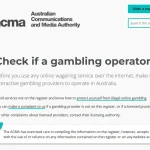
Enforcement belongs to the Australian Communications and Media Authority, or ACMA. It is the federal body responsible for enforcing the Act and monitoring compliance with national interactive gambling laws. Its work is not limited to issuing statements about the rules. ACMA can ask Australian internet service providers to block websites that provide prohibited gambling services or advertise them in Australia.
Choosing a casino for Plinko in Australia involves more than the game itself. Use these listings as a reference point, focusing on the specific payment and licensing details provided for each operator.
1. MrPacho
Payout speed: crypto 30-120 minutes, fiat 24-72 hours · Min. deposit: A$30
MrPacho lists crypto payouts at 30–120 minutes and fiat payouts at 24–72 hours. The minimum deposit is A$30.
2. Rollero Casino
License: Curacao Gaming Control Board OGL/2023/176/0095 (Hollycorn N.V.)
Rollero Casino is listed under Curacao Gaming Control Board licence OGL/2023/176/0095, held by Hollycorn N.V.
3. Neospin
License: Curacao Gaming Control Board OGL/2023/176/0095 (Hollycorn N.V.)
Neospin is listed under Curacao Gaming Control Board licence OGL/2023/176/0095, held by Hollycorn N.V.
4. LevelUp Casino
License: Curacao eGaming OGL/2023/174/0082 (Dama N.V.) · Min. deposit: A$15
LevelUp Casino is listed under Curacao eGaming licence OGL/2023/174/0082, held by Dama N.V. Its minimum deposit is A$15.
5. SkyCrown
License: Tobique Gaming Commission · Payout speed: crypto ~10-15 minutes, fiat 1-5 days · Min. deposit: A$30
SkyCrown is listed under the Tobique Gaming Commission. Its stated payout times are around 10–15 minutes for crypto and 1–5 days for fiat; the minimum deposit is A$30.
6. SpinsUp
License: Curacao Gaming Control Board OGL/2023/174/0082 (Dama N.V.)
SpinsUp is listed under Curacao Gaming Control Board licence OGL/2023/174/0082, held by Dama N.V.
7. Vegaz Casino
License: Curacao OGL/2024/1335/0780 · Min. deposit: EUR 20
Vegaz Casino is listed under Curacao licence OGL/2024/1335/0780. Its stated minimum deposit is EUR 20.
8. Kingmaker
Payout speed: crypto ~90 minutes, fiat 1-5 days · Min. deposit: A$30
Kingmaker lists crypto payouts at around 90 minutes and fiat payouts at 1–5 days. The minimum deposit is A$30.
9. WinSpirit Casino
License: Curacao eGaming OGL/2024/923/0383 (Antillephone N.V.) · Min. deposit: A$30
WinSpirit Casino is listed under Curacao eGaming licence OGL/2024/923/0383, held by Antillephone N.V. Its minimum deposit is A$30.
10. Uptown Pokies
License: Curacao (operating since 2017) · Min. deposit: A$20
Uptown Pokies is listed as operating under a Curacao licence and as having operated since 2017. Its minimum deposit is A$20.
The scale of that enforcement is visible in the blocked-site figures. Since November 2019, ACMA has blocked more than 1,455 illegal gambling and affiliate websites following enforcement action. Blocking is a practical boundary rather than a guarantee that every prohibited service disappears from view: the regulator’s role is to monitor compliance and use the powers available under the law.
Figures for services that have withdrawn from the Australian market since ACMA began enforcing the rules in 2017 are reported inconsistently. One count puts the total above 210; another gives a figure above 190. The disagreement is a reminder that enforcement statistics are not interchangeable with a complete map of what remains accessible at any moment.
The phrase “Plinko casino Australia” may describe a game sought by name, but it does not alter the legal position. Nor does a site’s offshore location or foreign licence make it an Australian-authorised online casino. For the regulator, the central issue is the provision of prohibited services to people in Australia and, where relevant, their advertising here.
The boundary is federal; the blocking is tangible.
What Casino Plinko Means Across Different Game Formats
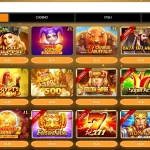
Plinko names a game idea more readily than a single, standardised set of rules. The familiar image is a ball moving through a field of pegs before landing in a lower space associated with an outcome. In a casino context, that image may be used to describe a gambling game, but the label alone does not establish how any particular version works.
Lightning Link Online Pokies in Australia: What to Know
That distinction matters because “casino game” is a broad category, not a promise of shared mechanics. A table game, a card game and a ball-and-board game can all be grouped under the casino label while asking different things of chance, decision-making and the player. Plinko-style games sit within that broad vocabulary as a recognisable concept; the name does not make them equivalent to every other casino game, or even to each other.
The visible path of a ball can make an outcome feel legible. It moves, meets obstacles and settles somewhere. Yet seeing a sequence unfold is not the same as knowing the rules governing it. A screen can show a ball falling through pegs without revealing how outcomes are generated, what each landing position means, or whether a player’s choices affect the result. Those details belong to the particular game’s rules, not to the word “Plinko”.
This is also why the visual resemblance between two games cannot establish that they have identical odds or payout structures. One version might use a different board layout, outcome range or set of rules from another. Without those details, comparisons based only on the name or appearance are thin. The game concept tells something about presentation; it does not, by itself, settle the mathematics.
Progressive jackpots offer a useful contrast. Their defining feature is not a ball’s route but a prize that grows as play contributes to a shared or local pool. In pokies, that growth may be tied to linked machines or a wider network. A standalone progressive is confined to a local machine-level arrangement; a networked one can extend across many machines or an operator’s fleet. The structure is more important than the decorative name.
A game’s name or visual presentation does not establish its odds, payout structures, or the presence of a jackpot.
Jackpot eligibility can also depend on conditions beyond the headline prize. A specialist review has described checking both the contribution rate and the minimum bet required to qualify. Some games set such a minimum; A$1.00 is one cited example, not a universal rule. That detail illustrates a broader point: the name of a game rarely tells the whole story about how its outcomes or prizes are arranged.
For Plinko, the same restraint applies. A description of a ball-and-peg format does not establish whether a particular game has a jackpot, what its outcome probabilities are, or how any payout is calculated. Those are separate questions, answered by the specific rules and disclosures attached to an individual game. A dramatic visual can make chance seem like a small mechanical story with a beginning and an end. The arithmetic, if disclosed, is another matter.
So “casino Plinko” is best understood as a family resemblance, not a technical specification. It points toward a style of game presentation, while leaving the important particulars to the individual version. A shared name is not a shared rulebook.
When Plinko Is Called a Slot
Calling a Plinko-style title a slot can describe how it is classified, rather than settle what kind of game it is. Casino catalogues often group products under familiar labels. A title placed in a slot category may therefore inherit that label from the catalogue, even when its name or presentation points elsewhere. The word is useful shorthand, but it is not a technical explanation.
Mines Casino Game in Australia: How It Works
The distinction matters because “slot” can refer to several things at once: a product category, a familiar visual style, or a game whose outcome is generated through a particular system. Those meanings overlap, but they are not interchangeable. A Plinko label alone does not establish how a particular product is built, how its outcomes are determined, or what rules apply. Nor does adding “slot machine” to its description supply those details.
This is where search labels become a small study in commercial language. A phrase such as “Plinko slot game” joins a recognisable game name to a broad category. Other combinations may add a title-like phrase or a catalogue name. Each extra word can make a result sound more specific while leaving the underlying classification unresolved. A name is not a rulebook.
The same caution applies to “demo” labels. The word signals a presentation described as a demonstration, but it does not by itself identify what is being demonstrated or establish the terms attached to it. A label cannot answer questions about the game’s design. It only tells something about the way the product is being presented.
“Top slot” is another category phrase, not a measurement. Without a stated basis, it does not tell whether “top” refers to popularity, a publisher’s placement, a review judgement or some other editorial choice. A ranking can sound like an objective property even when the word carries no information about the criteria. The hierarchy arrives before its explanation.
Labels like "top slot" or "demo" are often commercial shorthands or catalogue classifications rather than objective measurements of quality or technical specifications.
The RTP boundary
RTP is a more concrete term, but it needs to be attached to the right product. KA Gaming slot titles typically have RTP percentages in the 94% to 96% range. That range describes the provider’s slots in general; it does not establish the RTP of every Plinko-labelled title, or show that a particular title belongs to KA Gaming.
RTP is a theoretical return measure, not a promise about an individual session. It cannot predict the result of a particular round, and a provider-level range should not be mistaken for a confirmed figure for a named game. The label, provider and stated percentage each answer different questions. Blending them into one claim makes the wording tidier than the evidence.
That distinction is especially important when “Plinko” and “slot” appear together. The combination may be a catalogue decision, a title description, or a loose comparison. It is not enough to infer that every product carrying the phrase shares the same rules or return characteristics. Classification needs more than a familiar noun.
Australian English has its own everyday vocabulary for machine gambling: “pokies” is common where other markets might say “slots.” Yet the terminology does not erase the difference between a physical machine category and a product described online with slot language. A Plinko title can be called a slot in one context without becoming a conventional pokie in every relevant sense. Words travel more freely than definitions.
For that reason, descriptive language is more useful than confident relabelling. “Presented as a slot” leaves room for the distinction between a catalogue label and a verified game specification. “A slot with a particular RTP” is a stronger claim and needs a figure tied to that title. The category is not the proof.
Low-Volatility Slots in Australia: What the Term Means
The broader habit is familiar well beyond gambling: when a product is difficult to place, a known label lends it a shelf. That may make a catalogue easier to navigate, but it can also make unlike things appear interchangeable. In this case, “slot” is a signpost, not a full account of the game. A modest word, doing too much work.
Online Plinko Searches and Offshore Casino Services
An online Plinko listing can look like a small piece of a much larger casino catalogue. The wording may place the game beside digital pokies, table games or live-dealer rooms, as though all were simply different doors into the same service. For Australian residents, that appearance needs separating from the legal position: the Interactive Gambling Act 2001 prohibits operators from providing real-money online casino games to people in Australia.
That rule concerns the service, not the polish of its website or the country named on its licence. An offshore casino may display Plinko among its online games and accept Australian payments, while operating under a licence issued elsewhere. Neither an Australian-facing payment option nor a page that loads on a screen turns that offshore licence into Australian authorisation. Availability and legality are not synonyms.
A title such as “Golden Plinko” may be a branded label used to distinguish one listing from another. It does not, by itself, establish who supplies the game, what kind of service hosts it, or whether Australians may lawfully be offered real-money access. The same caution applies when a casino groups Plinko with pokies or promotes a dedicated online version: the label describes how a product is presented, not its standing under Australian law.
Legal Boundary
The Interactive Gambling Act 2001 prohibits operators from providing real-money online casino services to people in Australia, regardless of where the operator is licensed.
“Live casino” adds another layer of ambiguity. In casino language, it commonly signals a service presented in real time, often with a human dealer or host. A Plinko listing carrying that label might be framed as a live feature, but the phrase alone does not establish that a human is involved, that the service is available in Australia, or that its offer is lawful here. It is a category label, not a legal status.
The distinction matters because websites can make cross-border services feel local. Australian currency, familiar payment routes and localised wording may reduce the visible distance between the customer and the operator. Yet offshore operation remains offshore operation. A payment accepted from Australia says something about the operator’s commercial reach; it says nothing decisive about permission to provide prohibited interactive gambling services to Australians.
The federal framework places responsibility on operators rather than treating a foreign licence as a passport into the Australian market. The Australian Communications and Media Authority monitors compliance with the Interactive Gambling Act and can ask internet service providers to block access to websites offering prohibited services or advertising them in Australia. Blocking is an enforcement measure, not a statement that every site will be inaccessible at every moment. A page appearing in a browser does not settle the legal question.
This is why “online casino with Plinko” can describe several different things in ordinary usage: a site that lists the game, a promotional page describing it, or a service that claims to provide real-money play. Those descriptions should not be collapsed into one. A search result or catalogue entry may be visible without a lawful Australian service sitting behind it. Equally, a branded page may be hosted offshore even when its language and payment choices are aimed at Australian visitors.
High-volatility slots in Australia: what to expect
The public language of the internet is built to flatten geography. A casino page can arrive in the same browser as a local news site, with the same neat buttons and fluent copy. The law does not flatten it in the same way. Australia’s prohibition turns on the operator providing online casino gambling to people physically in the country, not on whether the service looks familiar, carries an offshore licence, or uses the word “live”.
That boundary should also shape how such listings are described. An offshore Plinko service is not an Australian casino option merely because it appears accessible, and explaining its presence is not an endorsement of using it. People under eighteen must not gamble; for adults, too, the legal distinction remains plain: online casino services offered to Australians are prohibited, while ACMA’s blocking powers are part of the way that rule is enforced. A screen is not a licence.
Real-Money Claims, Cashouts and Verification
A real-money label describes a balance that is presented as withdrawable, not money already returned to a player. Between those two states sit the operator’s payment rules, account checks and withdrawal conditions. In Australia, that practical distinction does not alter the legal boundary: the Interactive Gambling Act 2001 prohibits operators from providing real-money online casino services to people in the country. Offshore cashout procedures describe what such services may require; they do not make the services lawful to offer here.
Do
- Check the minimum withdrawal threshold
- Complete KYC verification early
- Review specific withdrawal policies
Don’t
- Assume a displayed balance is immediately withdrawable
- Mistake deposit methods for withdrawal options
- Treat promotional balances as cleared funds
The first test of a cashout claim is often the minimum withdrawal threshold. Offshore sites commonly set it somewhere between A$75 and A$150. A balance below the stated floor may therefore be unavailable for withdrawal until it reaches the required amount, even if the account displays winnings. The displayed figure and the amount that can actually leave the account are not always the same thing.
That gap is administrative, but it can shape a player’s choices. A threshold can leave a small balance stranded, or make continued activity seem like the route to collecting it. That is a particularly uncomfortable feature of a system in which the operator sets the conditions for access to the money. The number on the screen is not the whole transaction.
Why the first withdrawal can take another route
The first cashout commonly triggers KYC checks. These may require identity documents such as a passport or driver’s licence, alongside a utility bill to confirm an address. The request is not just a formality in the player’s account history: an operator may treat verification as a condition that must be completed before processing a withdrawal.
This makes the timing of verification important. A balance may appear available before the operator has checked the identity behind the account, while the first withdrawal brings that check to the foreground. If submitted documents are unclear, incomplete or inconsistent with account details, the process can stall. The practical meaning of “withdrawal available” is therefore narrower than the phrase suggests: it can mean that a request may be lodged, not that funds have cleared.
Video Slots Australia: RNG, Free Play and RTP
There is also a difference between a payment method being accepted for deposits and being available for withdrawals. A site’s payment page may describe several ways to send money in, but that alone does not establish how a cashout will be handled. The applicable withdrawal rules, verification requirements and threshold matter more than the number of payment logos on a page.
No cashout description should be read as a guarantee of speed. Processing can depend on the operator’s own checks and the conditions attached to the account. A claim about real-money Plinko, whether framed as a game, an app or a downloadable product, does not answer those questions by itself. The withdrawal policy does.
A claim is not a completed payment
A responsible reading separates a balance shown on screen from a payment received outside the account. The former is a record maintained by the service; the latter depends on the withdrawal request being accepted and processed. When identity checks arise only at the first cashout, that distinction can become clear at the least convenient point.
The same caution applies to claims of “no deposit” rewards or free play. Those labels concern how a balance is presented or acquired, not whether it can be withdrawn as cash. Promotional balances may have separate conditions, so they should not be treated as equivalent to cleared funds. The details belong to the terms attached to the offer, rather than to the headline.
For Australians, there is a further boundary that cannot be solved by comparing cashout methods. Real-money online casino services are prohibited for operators serving people in Australia, and ACMA can seek to block access to prohibited services. The player is not criminalised for using an offshore site, but that does not turn an offshore cashout policy into a local consumer safeguard. A document request may identify an account; it does not establish that the service is authorised in Australia.
Withdrawal Realities
- A displayed balance is a record, not a completed payment
- First withdrawals typically trigger mandatory KYC identity checks
- Minimum thresholds can leave small balances stranded
- Offshore cashout policies do not provide local consumer safeguards
In the end, a cashout claim has several separate parts: the displayed balance, any minimum threshold, the documents required for the first withdrawal, and the operator’s processing decision. Treating those as one promise obscures where uncertainty sits. The money may be visible. The conditions remain.
What a Plinko Review Can—and Cannot—Verify
A Plinko review is most useful when treated as an assessment of evidence, not a verdict delivered by a confident headline. It can describe what a page says a game is, record the rules and labels displayed there, and distinguish those statements from details that have been independently confirmed. Those are different tasks. A polished description is not, by itself, proof.
The name may be surrounded by other names: Plinko Rush, Plinko Verde or Plinko Deluxe, for instance. Such wording can identify a particular presentation, a product label or simply a phrase used to attract attention. A review should establish what the name refers to before treating it as a distinct game or attributing its features to a provider. Similarity of names does not establish common ownership, shared software or identical rules.
The same restraint applies to celebrity associations. A reference to MrBeast alongside Plinko does not establish that he created, approved or is connected to a casino service. Endorsement is a claim that calls for evidence, not an inference from a familiar name placed beside a game. In this market, that distinction matters all the more: online casino services are prohibited for operators to offer to people in Australia, and promotion of them is not made acceptable by the language of a review.
3-Reel Slots in Australia: Rules and Play
A review can also clarify what “free” means in a particular context, but the label alone proves little about the conditions attached to a balance. That subject deserves its own careful distinction; a free-play description should not be taken as evidence that money can be withdrawn. Nor does a review title establish that a service is available, suitable or lawful for Australian residents.
The most reliable reading separates observable details from conclusions. A rule shown on a game screen is evidence of what that screen displays. A claim about fairness, payout behaviour, ownership or reliability needs support beyond the claim itself. If the supporting material is unclear, the review should say so rather than turn uncertainty into certainty by repetition.
Operator rankings are a separate kind of assessment from game information. A game description cannot verify a ranking, and a ranking cannot prove the rules or identity of a game. Those categories often sit side by side online, which gives them the appearance of mutual confirmation. They are not. A review earns trust less by sounding decisive than by marking the boundary between what it can demonstrate and what it merely repeats.
Free Play, Bonus Funds and the Difference Between Them
“Free play” can describe a demonstration balance that has no cash value, or promotional credit attached to an account. The label alone does not settle which it is. One may allow a game to be tried without a deposit or withdrawal; the other may appear as a balance but remain conditional. The distinction is not cosmetic.
Free Play
A demonstration balance with no cash value, used to try a game without deposits or withdrawals.
Bonus Funds
Promotional credit that is not cash and often subject to wagering requirements before withdrawal.
Free Spins
A promotional feature where resulting balances may be restricted or unavailable as cash.
A free-play mode is separate from money available to withdraw. Results shown in a simulated session do not, by themselves, create a cash entitlement. The same applies to free spins: they describe a promotional game feature, not necessarily money that can be taken out. Terms determine whether any resulting balance is withdrawable, restricted, or unavailable as cash.
Bonus funds are different again. They are promotional credit, not cash, and winnings produced from them may remain subject to wagering conditions before withdrawal. A specialist review gives one illustration: a $100 bonus with a 40-times wagering requirement calls for $4,000 in bets before bonus-derived winnings can be withdrawn. That is an example reported by that review, not a universal rule. The arithmetic also does not mean that the amount wagered is paid back; it describes a condition attached to the bonus.
This is why a free version of a Plinko-style game and a bonus balance should not be treated as interchangeable. The first may be only a simulation. The second may be tied to account terms and further play. A promotional label can make both sound like a gift. The conditions do the accounting.
In Australia, promotional language should not be mistaken for an invitation to use an online casino service. The underlying distinction remains useful even without an account: free-play wording signals no guaranteed cash value, while bonus-derived funds carry conditions that can limit withdrawal. Neither phrase, on its own, tells the full story.
A balance is not a promise.
5-Reel Slots in Australia: Features and How They Work
Crypto Payments and the Cost of a Fast Withdrawal
Crypto can appear in descriptions of Plinko-style casino services as a payment route, but speed is only one part of what a withdrawal means. A specialist review describes crypto withdrawals as often clearing fastest. The same account notes that network fees and conversion spreads can reduce the amount ultimately received. The advertised speed and the value arriving at the other end are not the same measure.
A network fee is charged for processing a transaction on the relevant blockchain. A conversion spread is the difference between the exchange rate used to convert one currency or asset into another and a reference market rate. Either can narrow the gap between a displayed balance and what reaches a wallet. Their effect depends on the transaction and conversion arrangements; a label such as “crypto withdrawal” alone does not establish the net amount.
That distinction matters in searches for Plinko played with cryptocurrency. The game label says nothing about the cost of moving funds, and a fast clearance does not erase deductions. Nor does the presence of crypto change the legal status of an online casino service offered to people in Australia: real-money online casino games are prohibited under the Interactive Gambling Act 2001. A payment method is not a legal workaround.
Crypto is therefore better understood as a transfer option with a possible speed advantage and a cost attached, rather than a promise of a particular result. Payment descriptions can leave out the practical question of how fees and conversion affect the received amount. “Fast” is not a net figure.
Attention: The speed of crypto withdrawals does not account for network fees and conversion spreads, which can reduce the final amount received.
The distinction is less dramatic than the word crypto suggests. A balance shown on a screen, a withdrawal cleared by a service and funds received after network costs are separate stages in the description of a transaction. Without transparent details of applicable fees and conversion, the speed claim cannot show what the recipient keeps. That is the relevant trade-off—not a feature of Plinko itself, but a consequence of the payment route.
Bonus Terms: The Wagering Arithmetic Behind the Offer
A bonus can look like extra balance while functioning more like a calculation in progress. If its terms require wagering before bonus-derived winnings become withdrawable, the displayed amount is not yet cash. The requirement sets how much qualifying betting must take place; the game’s contribution rate determines how quickly that total accumulates.
A specialist review describes wagering requirements in the range of 30–50 times the bonus amount. That is a report about terms encountered in a review, not a fixed rule across operators or games. The arithmetic is plain enough: a 40-times requirement applied to a $100 bonus means $4,000 in qualifying bets. It does not mean that $4,000 must be lost, but it does mean the bonus cannot be judged by its face value alone.
Contribution rates complicate the sum. A specialist review reports blackjack contributing only 10% toward wagering requirements. On that basis, a bet of $10 would add $1 to the qualifying total, not $10. A game with a low contribution can therefore make the requirement take longer to satisfy, even when the stated multiple appears unchanged. The label on the bonus tells only part of the story.
For Plinko-themed promotions, the relevant detail is whether the game counts at all, and at what rate. Terms may distinguish between games, exclude some play, or impose other conditions. A title associated with Gods of Plinko does not, by itself, establish how its wagers count. The written rules do.
This is the arithmetic behind a no-deposit bonus as much as any other bonus: “no deposit” describes how funds are issued, not whether they are freely withdrawable. The distinction matters particularly in a market where real-money online casino services are prohibited for operators serving people in Australia. A bonus is not a loophole in that boundary. The small print does not repeal the law.
Pokies, Losses and the Australian Reform Debate
A Plinko game may arrive wrapped in the language of luck, novelty or a casino brand, but Australia’s gambling debate is shaped by a more familiar fixture: the pokies. Their social cost is not an abstract concern. It is counted in losses, and in the political arguments over how much a machine should allow someone to stake.
A report from gamble.com.au put Victorian poker-machine losses at $2.6 billion over the year it examined, exceeding the 2015 figure by more than $44.7 million. The same report singled out the Epping Plaza Hotel in Melbourne’s north: its 100 machines brought in more than $21 million during the reported year. Such totals describe money lost by players, not a measure of entertainment. The distinction is plain, even when public debate prefers softer language.
Senator Nick Xenophon and MP Andrew Wilkie proposed limiting poker-machine bets to $1. The proposal placed a small, concrete figure against a system in which losses can accumulate across repeated play. It also exposed a familiar disagreement: whether gambling harm is best addressed by individual restraint or by changing the conditions built into the machines.
The wider argument matters even when attention turns to a branded Plinko game or a casino presentation styled as British. Labels travel; the consequences of gambling remain local. In Australia, poker-machine losses have helped make reform a public question rather than a private matter. Gambling can cause serious harm, particularly for vulnerable people, and it is not a source of income. Pokies belong to a social landscape as much as a commercial one. That is the uncomfortable part.
Any gambling activity is for adults aged 18 or older. Age limits do not erase harm; they mark only one boundary around it.
Games

3-Reel Slots in Australia: Rules and Play
A three-reel layout offers a familiar compact display, while each game's paytable and instructions determine...

5-Reel Slots in Australia: Features and How They Work
A five-reel layout describes the columns, while features, paytable RTP and random outcomes shape how...

7-Reel Slots in Australia: How Each Spin Works
The reel count shapes the display, while RNG selects each result independently and RTP describes...

Bonus Buy Slots in Australia: Features and RTP
A practical guide to bonus-buy mechanics, demo limits and RTP, set against the restrictions shaping...

High-volatility slots in Australia: what to expect
High volatility means larger payouts are infrequent and quiet stretches can last, rather than signalling...

Low-Volatility Slots in Australia: What the Term Means
Low volatility points to a tendency toward frequent, smaller wins, not a fixed timetable or...

Pokie Machines in Australia: Rules, Odds and Risks
A practical look at machine mechanics, free-play limits and the legal and financial risks of...

Progressive Jackpot Slots: How Pools and Prizes Work
Progressive games vary in how wagers fund a pool, how prizes trigger and what rules...

Best RTP Slots in Australia: How RTP Works
RTP is a long-run statistical expectation; game versions, variance and Australia's legal context all shape...

Video Slots Australia: RNG, Free Play and RTP
A practical look at random outcomes, free-play observations and the information paytables and RTP can...

Casino Dice Games in Australia: Rules and Legality
This guide separates game mechanics, odds and live formats from the legal question of whether...

Crash Casino Games in Australia: Risks and Rules
Crash games turn a rising multiplier and a timed cash-out into a wager, but neither...
Lightning Link Online Pokies in Australia: What to Know
The original game is played on venue machines; online pages using its name do not...

Live Baccarat Online in Australia: Legal Context
Australia has no locally licensed online casino market; this guide explains the legal distinction and...

Live Blackjack Online in Australia: Legal Guide
Australia has no locally licensed online casino route; the article separates legal boundaries from claims...

Live Roulette in Australia: Rules and Dealer Claims
It distinguishes Australia’s regulatory position from claims about dealers, bonuses, odds and roulette strategies. Online...

Mines Casino Game in Australia: How It Works
The guide places Mines mechanics alongside free-play limits, bonus conditions, offshore access and questions about...

Pokies Tips and Tricks: What Actually Matters
A practical look at independent spins, bonus conditions and session budgets, without claiming any tactic...

Real Money Casino Table Games in Australia: Rules
The guide covers Australia's online gambling restrictions alongside table formats, player decisions, odds and the...